Extract from the official Journal of the House of Commons recording proceedings on 14 February 1766 (6 George III). Contains orders for colonial trade data, committee proceedings on Isle of Man-related papers presented by Secretary Conway and the Chancellor of the Exchequer, and numerous petitions regarding enclosure, roads, and infrastructure projects. References examination of witnesses including Benjamin Franklin and testimony on smuggling, leather trade, and glove manufacturing.
Testimony before a House of Commons committee examining the condition of the River Tyne, harbour silting, ballast discharge practices, and their impact on coal trade navigation. Includes detailed witness statements from ship masters, pilots, quay operators, and river bailiffs on sand accumulation, Middle Ground formation, and proposals for canal construction in Lancashire/Cheshire. Relevant to understanding parliamentary procedure, commercial interests, and infrastructure debates contemporary with the 1765 Isle of Man Revestment.
Extract from the House of Commons Journal for 1765-1766 containing detailed parliamentary resolutions on stamp duties for the American colonies and plantations, along with various local road and enclosure petitions. The stamp duty resolutions specify rates for land grants, legal instruments, publications, and other documents, with proceeds to be paid to the Exchequer for colonial defence. This source is crucial for understanding Westminster's fiscal policy toward the colonies and the administrative framework that would affect colonial trade and governance.
A 2025 House of Commons Library research briefing providing comprehensive overview of the constitutional status, governance structures, and UK Government relations with the Crown Dependencies (Jersey, Guernsey, Isle of Man). Covers legislative processes, international relations, and the impact of Brexit. Includes substantial sections on Isle of Man history, the 1765 Revestment (when the lordship reverted to the Crown due to smuggling), and comparative constitutional frameworks.
A comprehensive 2025 research briefing by the UK House of Commons Library examining the constitutional status, governance structures, and UK relations of the three Crown Dependencies (Jersey, Guernsey, Isle of Man). Covers legislative processes, international treaties, and the impact of Brexit. Includes detailed sections on Isle of Man's Tynwald system, historical background from 1765 Revestment, and intergovernmental relations.
A comprehensive contemporary research briefing on the constitutional status, governance, and international relations of Jersey, Guernsey, and the Isle of Man. Covers the historical background of Crown Dependencies including the 1765 Revestment, constitutional arrangements, UK relations, international treaties, and Brexit implications. Provides contextual framework for understanding the Isle of Man's unique position and development since the Revestment.
A comprehensive research briefing on the constitutional status, governance structures, and UK relations of the Crown Dependencies (Jersey, Guernsey, Isle of Man). Covers historical background, legislative processes, international relations, Brexit implications, and financial arrangements. Provides contemporary parliamentary context for understanding the Crown Dependencies' constitutional position within the UK framework.
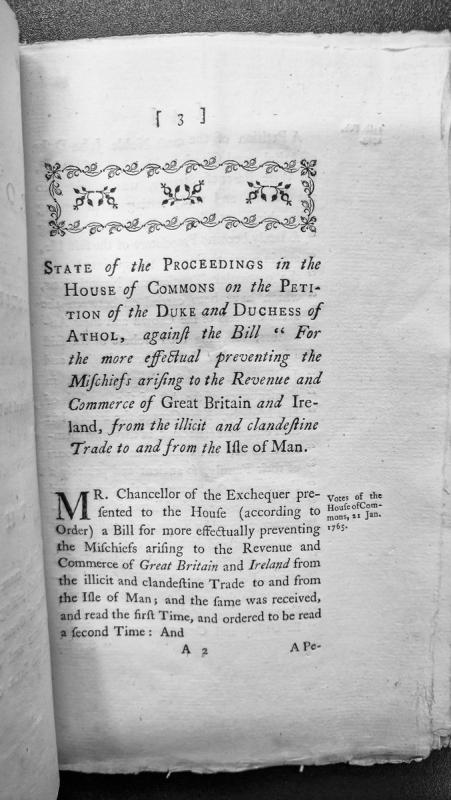
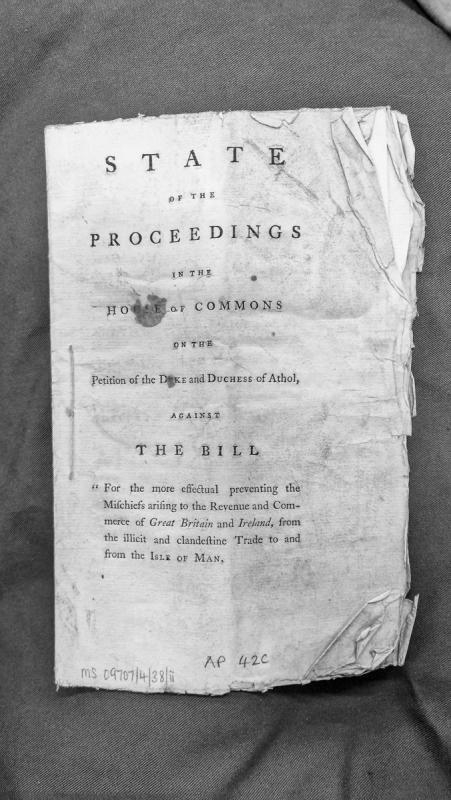
A printed record of proceedings in the House of Commons concerning a petition by the Duke and Duchess of Athol against a bill designed to prevent illicit trade to and from the Isle of Man. The Chancellor of the Exchequer presented the bill on 21 January 1765, which aimed to protect the revenue and commerce of Great Britain and Ireland.
A printed pamphlet documenting parliamentary proceedings in the House of Commons regarding a petition by the Duke and Duchess of Athol opposing legislation aimed at preventing illicit trade to and from the Isle of Man. The bill sought to protect the revenue and commerce of Great Britain and Ireland from clandestine trading activities.
The lower house of the Manx legislature, comprising twenty-four members. Originally a body summoned to hear and affirm the law as declared by the Deemsters — 'a jury rather than a Legislature' in Walpole's phrase — the Keys evolved by the mid-sixteenth century into a law-making body initiating statutes, levying duties, and setting the Book of Rates. Members were not elected by popular vote until 1866; when a member died, the remaining Keys nominated two candidates and the Governor chose one. Membership was for life. The Keys' Resolution of March 1765, signed by sixteen members, appointed commissioners 'to preserve the inherent and Constitutional Rights of the People of this Isle, as much as in them lies.' The Keys spent £3,153 of their own money across forty-five years defending Manx constitutional rights. In 1853, the Keys admitted their own self-elected status was constitutionally indefensible. The House of Keys Election Act of 1866 introduced popular election. Women property-holders gained the vote in 1881 — the first territory in the British Empire to include women in the electorate for a national legislature.
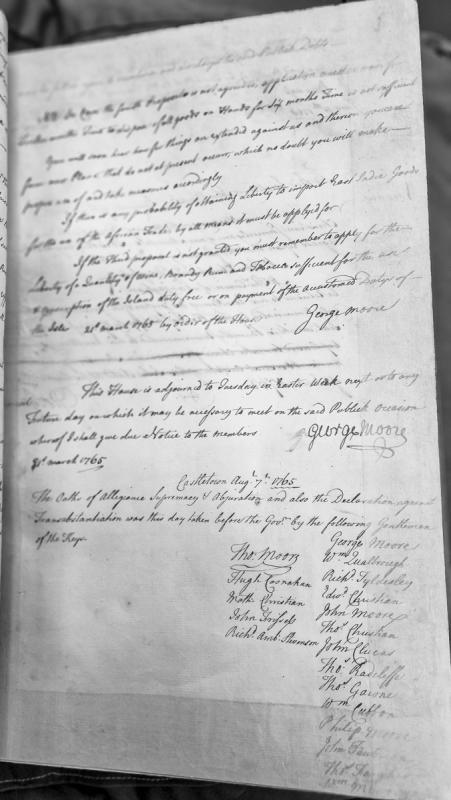
An administrative document containing directives regarding public debts, trade proposals, and import liberties, followed by a record of oaths taken by members of the House of Keys on 7 August 1765 in Castletown. The document includes orders from George Moore regarding proposals and applications for trade privileges.
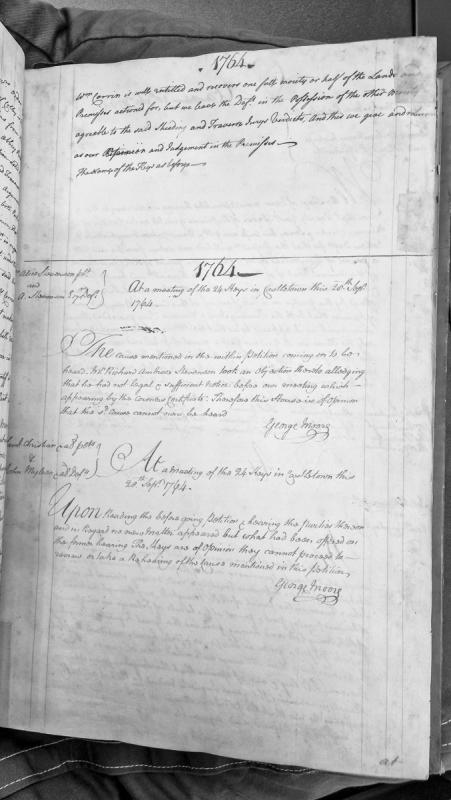
Two House of Keys rulings from a meeting in Castletown: the first dismissing a cause brought by Richard Ambrose Stevenson due to insufficient legal notice, and the second refusing to grant a rehearing in a cause between Daniel Christian (petitioner) and John Mylrea (defendant).
Collection of official correspondence and resolutions documenting the structural decay of the House of Keys in Castletown, Isle of Man. Includes architectural survey by Thomas Brine (October 1817), House resolutions authorizing removal to the George Inn, and subsequent correspondence between Lieutenant Governor Smelt and Home Secretary Lord Sidmouth regarding funding and reconstruction (1817–1819). Demonstrates governmental infrastructure challenges and Crown funding mechanisms for island institutions.
Official correspondence from Lieutenant Governor Charles Smelt to Home Secretary Lord Viscount Sidmouth reporting that the House of Keys (Manx legislature) was declared unsafe on 16 October 1817 by architect Thomas Brine's affidavit. Includes resolutions by House members to adjourn to the George Inn and requests for a government grant to rebuild. A follow-up letter from 7 October 1819 details the rebuilding contract with Brine and payment arrangements. Demonstrates post-Revestment governance infrastructure and the Crown's relationship with Manx institutions.
The House of Keys Election Act gave Manx people the right to elect their own representatives for the first time. Previously the Keys had been a self-electing body. The Act was the culmination of forty-five years of petitioning — the constitutional machinery that the Revestment had silenced, slowly restarting.
Gave Manx people the right to elect their own representatives to the House of Keys for the first time. Previously the Keys had been a self-electing body. The Act was the culmination of forty-five years of petitioning — the constitutional machinery that the Revestment had silenced, slowly restarting.
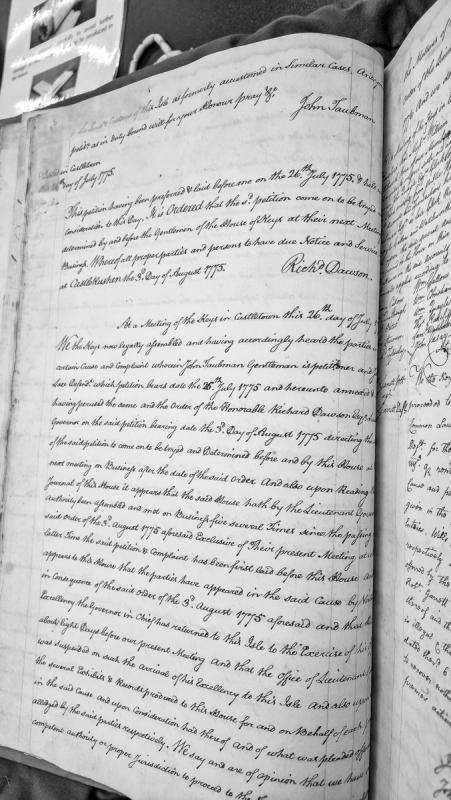
A House of Keys proceeding documenting a petition by John Taubman (Gentleman) against a defendant named Lace. The document includes the original petition dated 26 July 1775, an order by Governor Richard Dawson dated 3 August 1775 directing the matter to the House of Keys, and the Keys' assembled response indicating consideration of the case and jurisdictional questions.
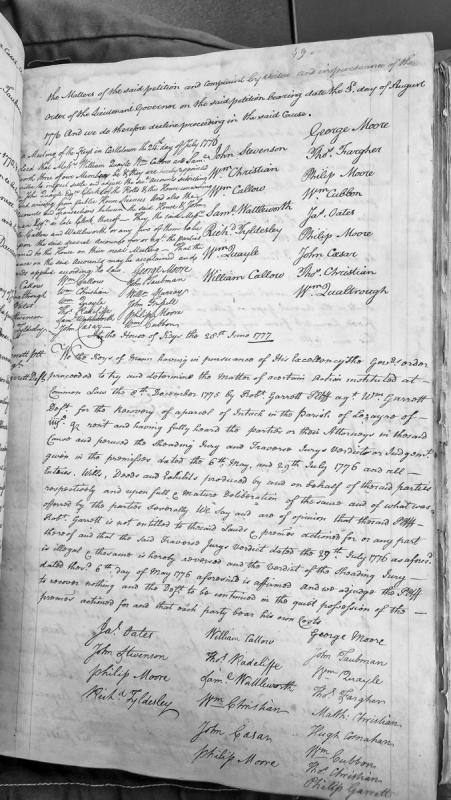
A House of Keys judgment dated 28 June 1777 determining a common law action instituted 8 December 1775 by Robert Garrett (plaintiff) against William Garrett (defendant) concerning an intack (enclosed land) in the Parish of Lezayre. The Keys reversed the traverse jury's verdict of 29 July 1776, affirmed the sheading jury's verdict of 6 May 1776, and ruled in favour of the defendant.
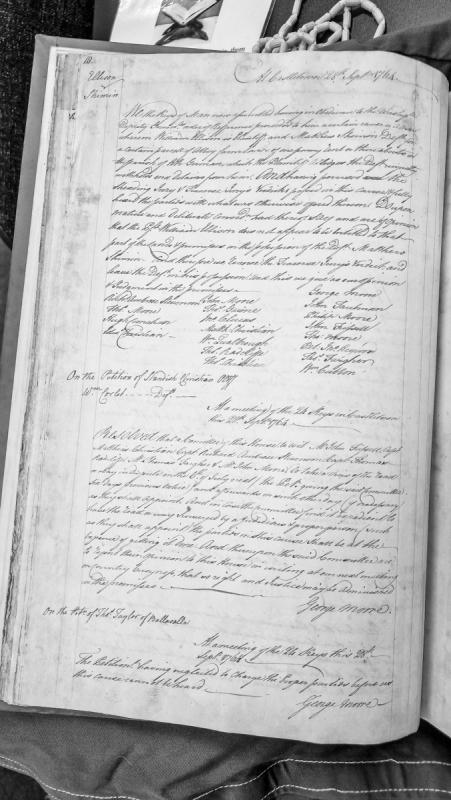
Record of House of Keys proceedings at Castletown on 28 September 1764, containing a judgment reversing a Traverse Jury's verdict in a land dispute over Abbey farm land in the parish of Kirk German between William Ellison (plaintiff) and Matthew Shimin (defendant). The document also records resolutions on petitions regarding a disputed road and a case by Thomas Taylor.
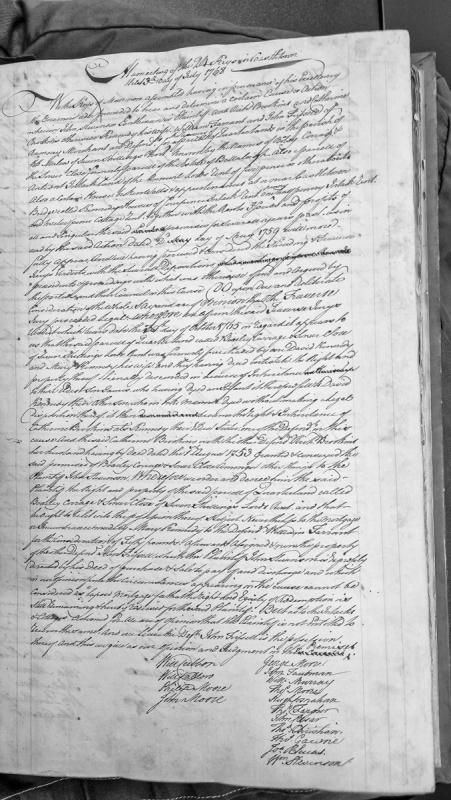
A judgment of the House of Keys assembled at Castletown determining a property dispute over quarterlands and cottage in the Parish of Malew. The Keys affirm a Traverse Jury verdict from 1765, awarding John Swanson possession of Bradly Corage and Simer Close but subject to a mortgage held by William Tarrant, and denying him the Intacks and Cottage.
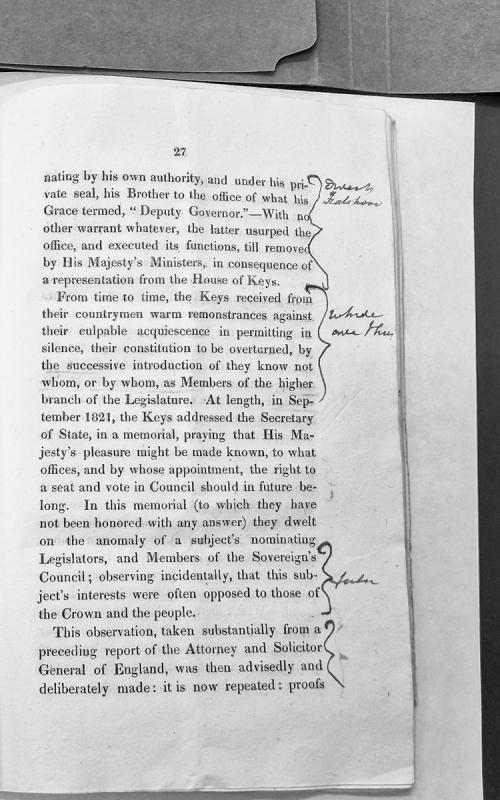
A political document discussing the House of Keys' concerns about the irregular appointment of legislators and council members by private authority. It references a September 1821 memorial to the Secretary of State regarding the anomaly of a subject nominating members to the sovereign's council, with observations that such a subject's interests may conflict with those of the Crown and people.
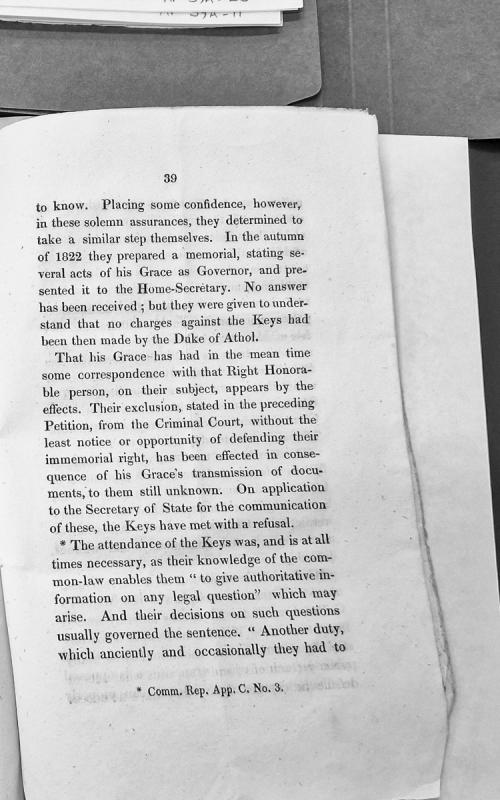
Extract from a petition by the House of Keys describing their exclusion from the Criminal Court and their attempts to address grievances with the Governor (Duke of Athol) through formal channels. The document references a memorial presented to the Home-Secretary in autumn 1822 and discusses the Keys' traditional legal role and rights.
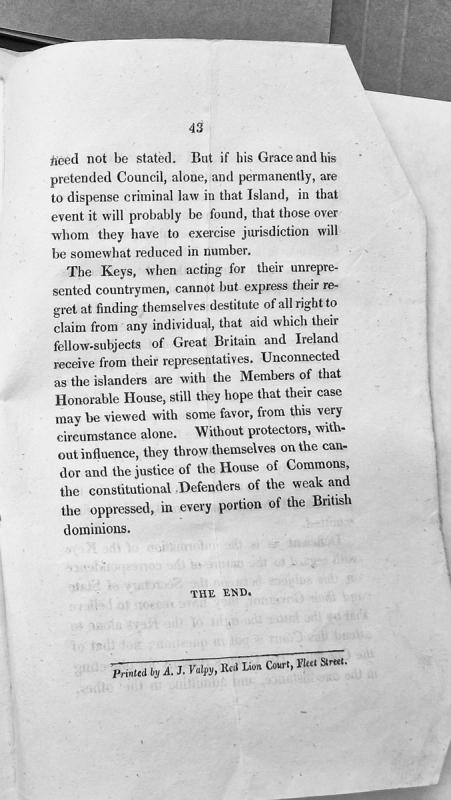
This is the concluding page of a printed pamphlet representing a petition or formal appeal by the House of Keys (the Manx parliament) to the House of Commons. The passage addresses concerns about the concentration of criminal law dispensation in the hands of the Duke of Atholl and his council, arguing that Manx islanders deserve representation and protection similar to other British subjects.
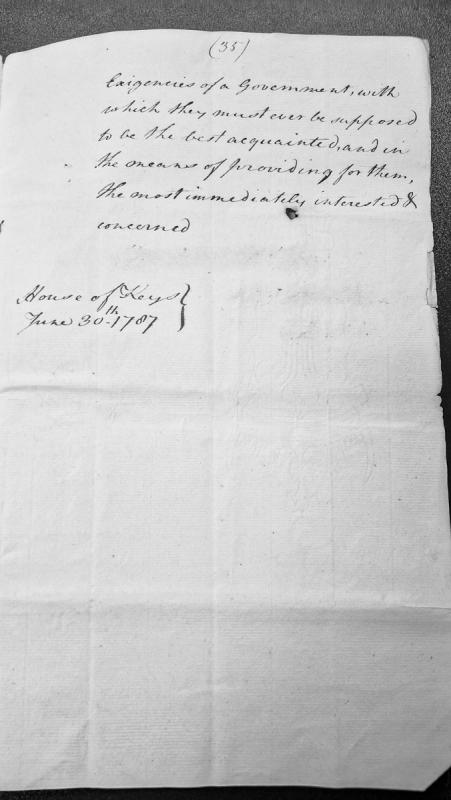
A fragment of a House of Keys document dated June 30th 1787 concerning the exigencies of government and the means of providing for them. The text appears to be part of a larger judgment or resolution discussing governmental matters and the responsibilities of the House of Keys.
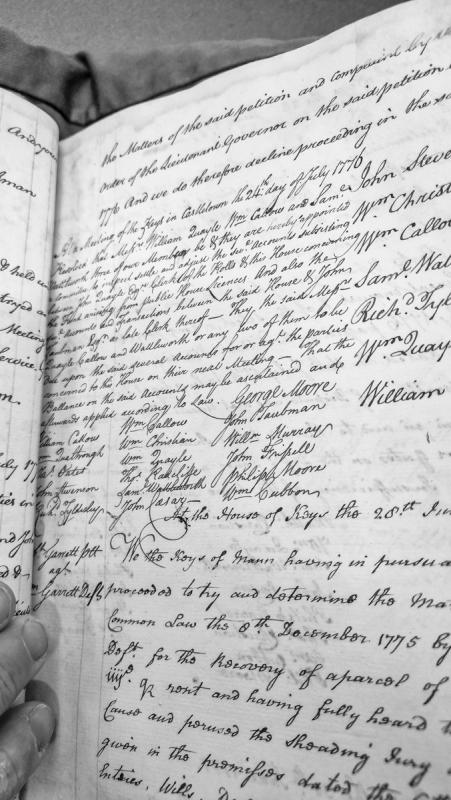
Two House of Keys documents: (1) A resolution from 24 July 1776 appointing a committee to inspect and settle accounts between the House and John Quayle Esq. (Clerk of the Rolls) concerning fines from Public House Licences, and accounts with John Taubman Esq. as late Clerk; (2) A judgment record dated 28 June regarding a Common Law case tried on 8 December 1775 between Sgt Garrett (Plaintiff) and Garrett (Defendant) for recovery of property with associated rent claims.