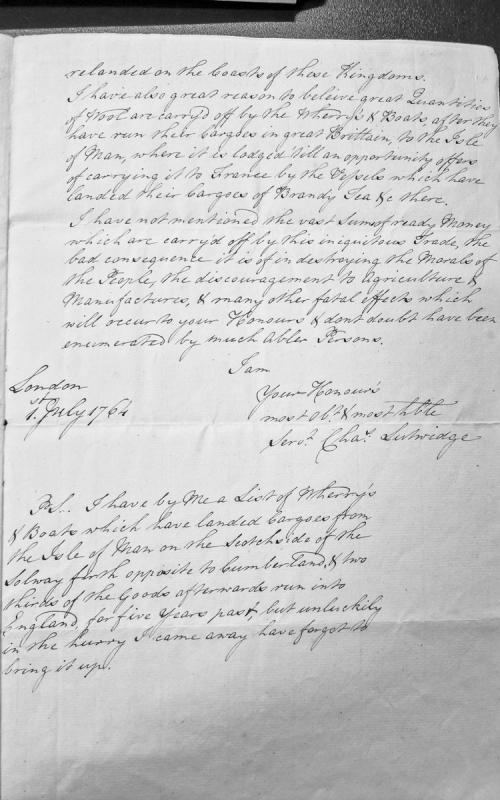
A letter from Charles Lutwidge to unnamed authorities ("Your Honours") detailing smuggling operations centred on the Isle of Man. The writer describes how contraband goods (brandy, tea, wool) are transported between Great Britain, the Isle of Man, France, and Scotland via small vessels. The letter emphasizes the economic and moral damage caused by this illicit trade.
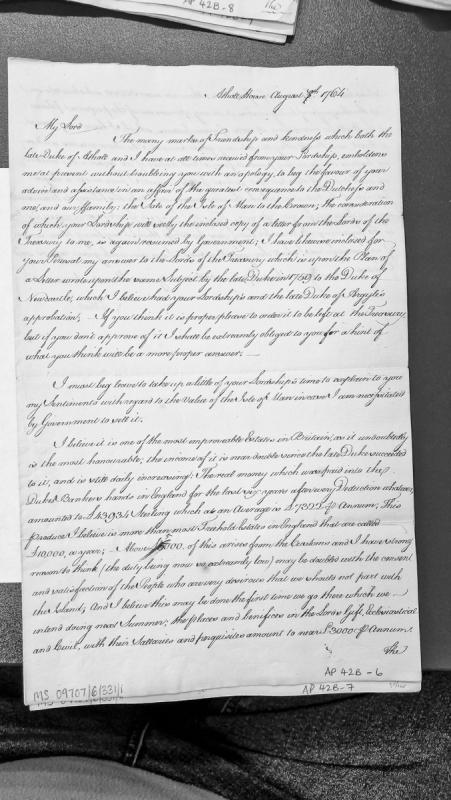
A letter from the Duke of Athole to an unnamed Lord regarding the potential sale of the Isle of Man to the Crown. The Duke seeks advice on his response to the Lords of the Treasury and provides detailed financial information about the island's income and value, arguing it is an improveable and honourable estate.
A letter from Richard Dawson (Governor of the Isle of Man) to the Treasury dated September 1778, detailing the acute shortage of copper coinage on the island and requesting Crown authorization to mint 300 pounds worth of Manx pence and 150 pounds of halfpence. The letter explains the historical distinction between Manx and English copper currency, notes that no coinage has been issued since 1758, and references pre-Revestment practices when the Lord Proprietor would authorize such mintage. Relevant to understanding post-Revestment governance and economic administration of the Island.
A letter from Richard Dawson (Governor of the Isle of Man) to a senior government official (addressed as 'My Lord') requesting permission to issue copper coinage to alleviate a shortage of small change affecting trade, particularly the herring fishery. The letter outlines the historical distinction between Manx and English copper currency, the 1758 date of the last coinage, and proposes a three-hundred-pound issue of pence and one-hundred-fifty-pound issue of half-pence bearing the King's head and the Island's arms.
A State Paper from the Office of Scotland (5 Jas I) addressing a petition by the Earl of Derby and co-heirs regarding their claim to the Isle of Man. The letter, from Privy Council members to Lord Chief Justice Popham and senior judges, requests legal examination of patents and defects in title following Queen Elizabeth I's assumption of sovereignty. This document illuminates early Stuart-era disputes over Manx sovereignty and the Crown's assertion of rights over the island.
Correspondence from Major Joseph J Durbin to James McCrone requesting patronage from the Duke of Atholl for a subscription to build a school for poor children at Foxdale lead mines. The letter indicates local landowner Mr Cain has offered ground and construction oversight, with hopes for community donations. Relevant to understanding post-Revestment Atholl interests and social conditions in Manx mining communities.
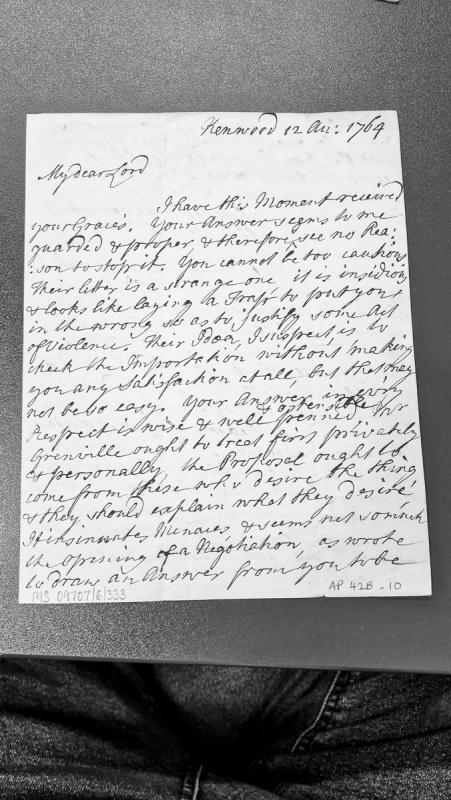
Private letter from a correspondent to a nobleman (addressed as 'My dear Lord' and 'Your Grace') discussing a recent answer to what appears to be a proposal regarding importation restrictions. The writer advises the recipient that his response is appropriately guarded and proper, warns against what he perceives as a trap in the other party's letter, and criticizes the approach taken, suggesting Mr. Grenville should negotiate privately and personally.
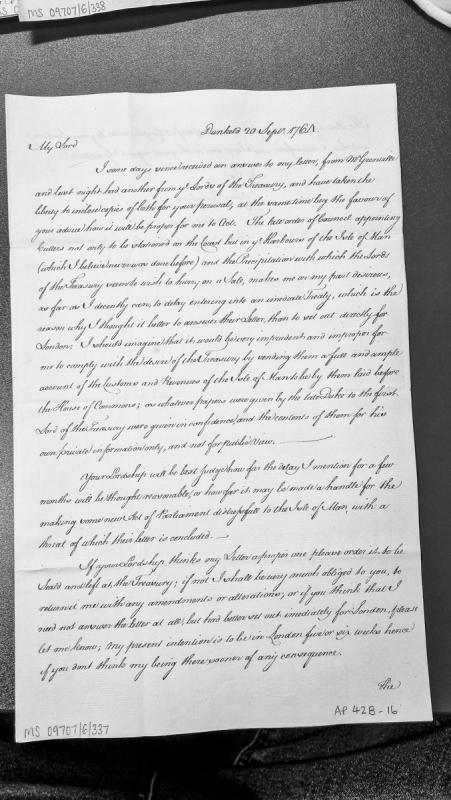
A letter from Dunkeld dated 20 September 1761 discussing correspondence with Mr Grenville and the Lords of the Treasury regarding the Isle of Man. The writer seeks advice on how to proceed with negotiations concerning the sale of customs and revenues, expressing reluctance to provide a full account to be laid before Parliament, citing confidentiality of prior documentation from the late Duke.
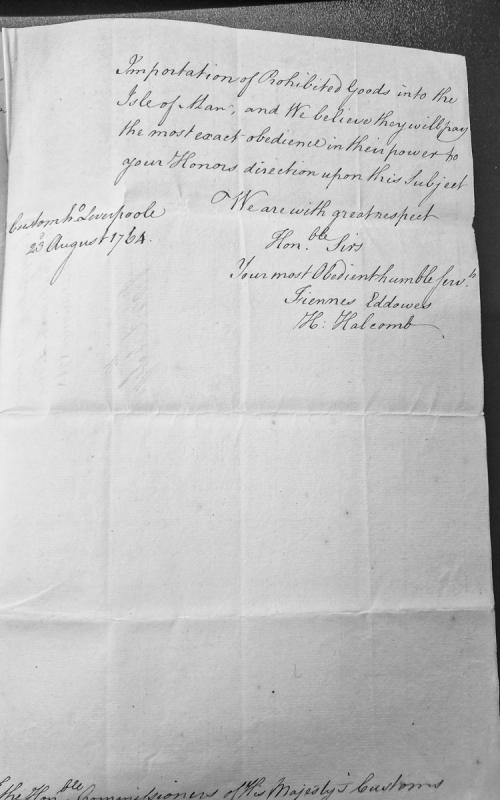
A letter from the Custom House at Liverpool dated 23 August 1764, addressed to the Commissioners of His Majesty's Customs. The authors express their belief that authorities will comply with directions regarding the importation of prohibited goods into the Isle of Man.
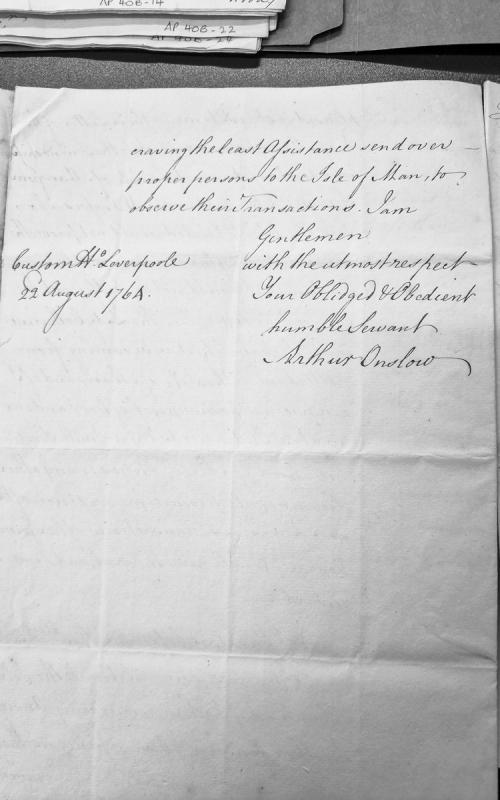
A letter fragment dated 22 August 1764 from Arthur Onslow at Custom House Liverpool, addressed to recipients requesting assistance with sending proper persons to the Isle of Man to observe transactions. The letter employs formal 18th-century epistolary conventions.
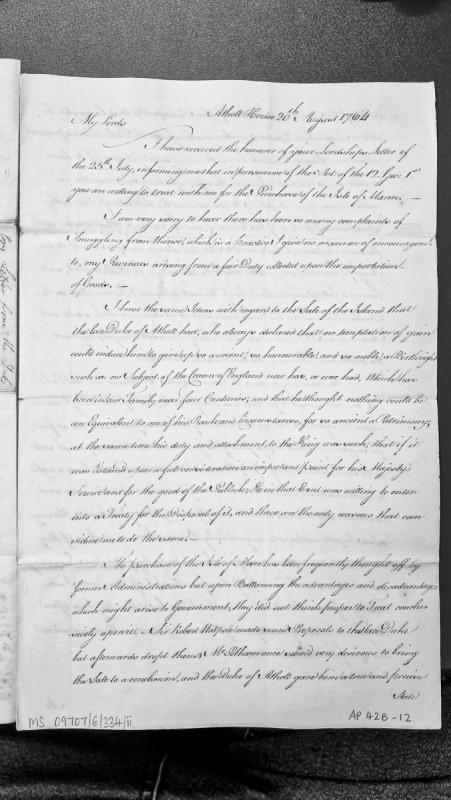
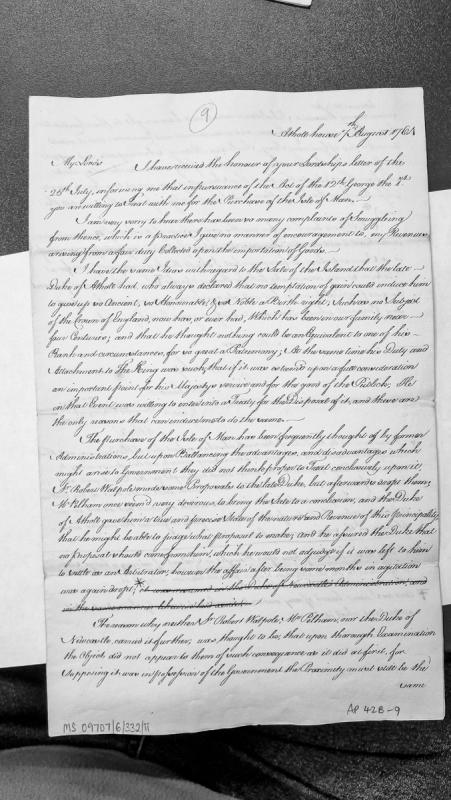
A formal letter from the Duke of Atholl to government lords responding to a proposal to purchase the Isle of Man under the Act of 12 George I. The Duke expresses reluctance to sell the ancient family patrimony held for nearly four centuries, though indicates willingness to treat if deemed essential for the King's service and public good. The letter discusses previous administrative attempts to purchase the island, including proposals by Sir Robert Walpole and Mr Pelham.
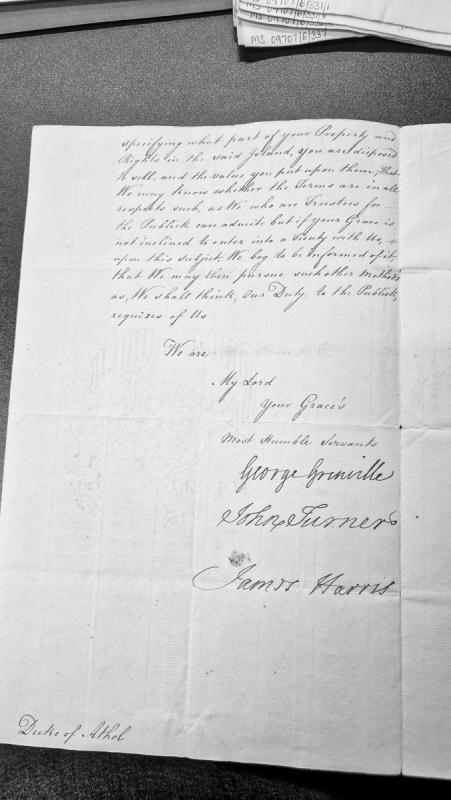
A formal letter from government trustees (Grenville, Turner, Harris) to the Duke of Athol requesting clarification on his willingness to sell property and rights in the Isle of Man. The letter indicates they act as trustees for the public interest and seek either terms for a treaty or notification of refusal to negotiate.
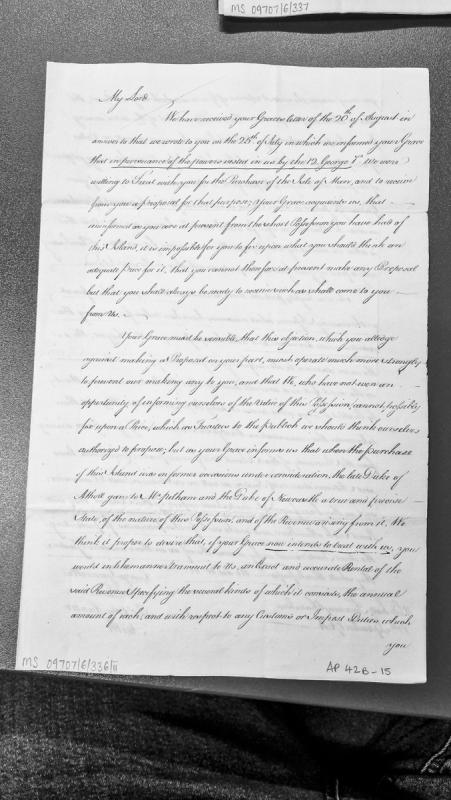
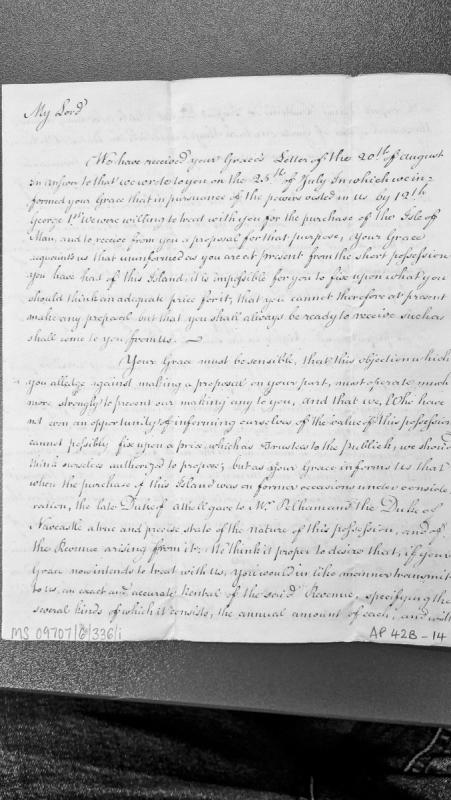
Official correspondence from government trustees (likely Board of Treasury) to the Duke of Atholl regarding a potential purchase of the Isle of Man. The letter references authority under 12 George I, discusses the difficulty of establishing a fair price without adequate information, and requests a detailed rental and revenue statement similar to one previously provided by the late Duke of Atholl to Pelham and Newcastle.
Official correspondence addressing the Duke of Atholl's reluctance to propose a price for the Isle of Man. The writers, acting as trustees under powers from George I, note that the Duke previously provided financial details to Pelham and Newcastle, and request similar documentation of revenue and rental information to facilitate negotiations.
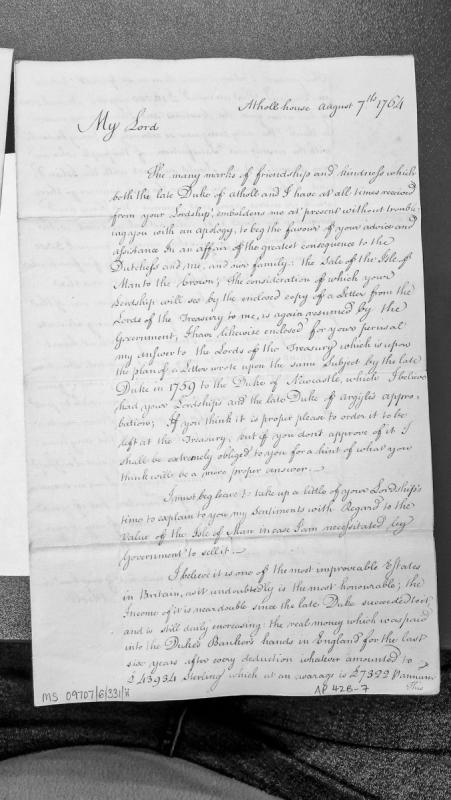
A letter from the Duke of Atholl to an unnamed Lord regarding the potential sale of the Isle of Man to the Crown. The Duke seeks advice on his response to the Lords of the Treasury and provides detailed financial information about the Isle's income over the previous six years, totalling £43,934 Sterling.
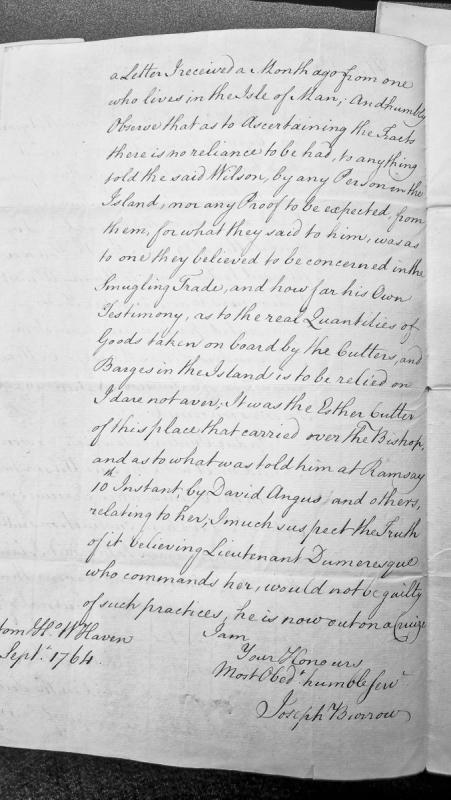
A letter from Joseph Burrow in Whitehaven to official recipients expressing skepticism about smuggling allegations involving the cutter Esther and Lieutenant Dumeresque. Burrow discusses the unreliability of testimony from Isle of Man residents and questions claims made at Ramsay regarding the vessel's activities.
A letter from the Duke of Athole to a Lord regarding the Crown's offer to purchase the Isle of Man under the Act of 12 George III. The Duke explains his reluctance to sell this ancient hereditary possession despite its historical significance, but indicates willingness to negotiate if it serves the King's interests. He discusses previous governmental attempts to acquire the island under Walpole, Pelham, and Newcastle.
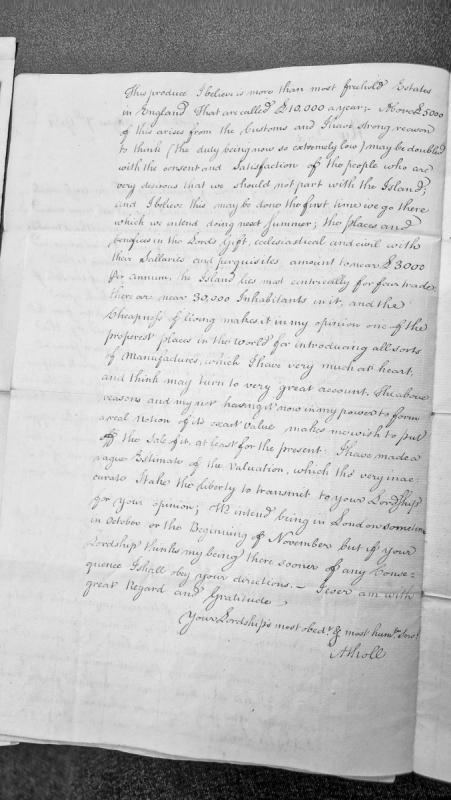
A letter discussing the financial value and potential of the Isle of Man, including revenue from customs, ecclesiastical and civil positions, and opportunities for manufacturing. The writer proposes deferring the sale of the island and requests the recipient's opinion on a valuation estimate.
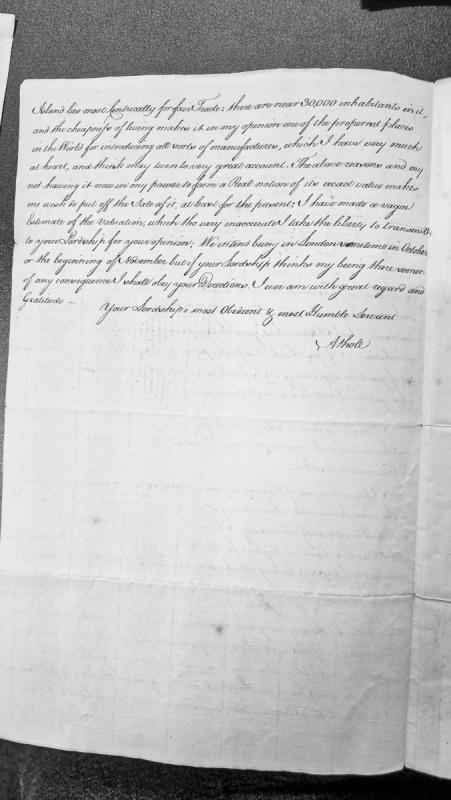
A letter fragment discussing the Isle of Man's suitability for trade and manufacture, with approximately 30,000 inhabitants and favorable cost of living. The writer defers the sale of property pending a proper valuation and indicates plans to be in London in October or November.
A State Paper from the Scottish Office (5 Jac I) addressed to Sir John Popham and other judges, requesting legal review of patents concerning the succession to the Isle of Man following the death of Ferdinand, Earl of Derby. The letter relays a petition by the Earl of Derby, Earl of Huntington, Lord Chandois, and Sir John Egerton (heirs general) seeking to challenge the Crown's claim to the island, which Queen Elizabeth I had assumed by royal prerogative. King James I has ordered a hearing and now requests written opinions on any defects in the patents under English law.
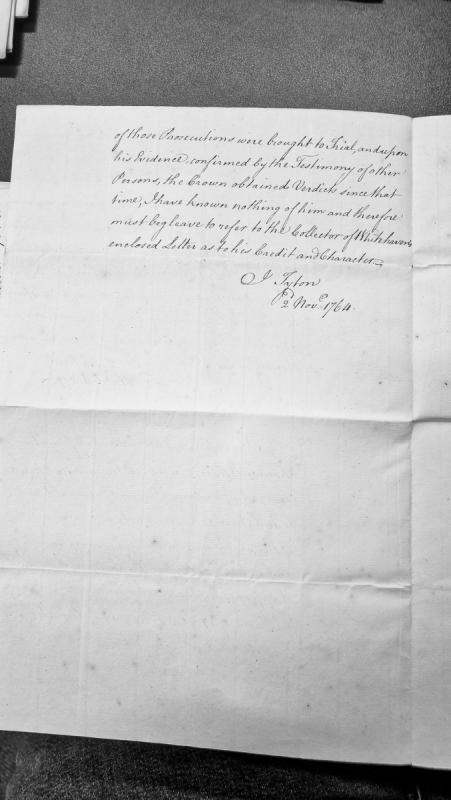
A brief administrative letter from I. Tyton dated November 2, 1764, concerning prosecutions brought to trial and the credibility of a witness. The author refers to enclosed correspondence from the Collector of Whitehaven regarding the subject's character and credit.
Letter from Castletown officials (Dan Mylrea and John Quayle) to the Duke of Atholl dated 24 July 1765, reporting on conditions following the Revestment. Discusses the reinstatement of Mr. Quayle as Clerk of the Rolls, outstanding tea duties owed by merchants, and widespread smuggling operations in harbours around the Isle, including details of clandestine landing methods using cutters and night landings at remote creeks.
Official correspondence from Isle of Man administrators (Mylrea and Quayle) to the Duke of Atholl regarding post-Revestment governance issues, including the reinstatement of Mr Quayle as Clerk of the Rolls, merchant disputes over tea duty payments, and the practical difficulties of enforcing landing procedures amid intense smuggling activity. The letter reveals the extent of contraband operations and merchant non-compliance in May 1765.
Administrative letter from Manx officials (Mylrea and Quayle) to the Duke of Atholl reporting the seizure of wreck tobacco by revenue officer Betham and requesting guidance on the Duke's rights to wrecks under the 1765 Revestment Act. The letter documents a conflict between traditional ducal wreck rights and post-Revestment Crown authority over wreck goods.
Administrative letter from officials (Mylrea and Quayle) to the Duke of Atholl concerning an application by Mr Arthur for a licence to occupy and develop land on Douglas Quay, Isle of Man. The letter discusses a pre-existing stable and coach house built circa 1756 and a new application for additional yard space, with proposed rent of 5 shillings annually. Illustrates landlord-tenant relations and property administration in the immediate post-Revestment period under ducal sovereignty.