A charter issued by King John of England placing Reginald, King of Mann, under royal protection. The document guarantees Reginald's safety and that of his lands and people, forbidding any harm to them. Relevant to understanding early medieval Manx sovereignty and the island's relationship with the English Crown, providing constitutional and political context predating the 1765 Revestment.
A royal charter in which King John of England takes Reginald, King of Mann, under his protection, defence, and custody, extending protection to all his lands and people. This is a foundational document for understanding the feudal relationship between the English Crown and the Kings of Mann in the medieval period, establishing the protectorate model that would evolve through subsequent centuries leading to the 1765 Revestment.
A royal letter patent from King John of England protecting the King of Mann and his possessions from incursion by Irish mariners. This early 13th-century document demonstrates English Crown assertion of authority over Mann and establishes a precedent for protective sovereignty. It is relevant to understanding the constitutional relationship between England and Mann in the pre-Revestment period.
A royal writ from King John of England protecting the territory and possessions of the King of Mann from unauthorized entry by English mariners and Irish ships. The document establishes early English royal recognition and protective authority over Mann, predating the Revestment by over 550 years. It is transcribed from Rotuli Litterarum Patentium and appears in the Manx Society's Monumenta de Insula Manniae collection.
A financial and property abstract listing various parcels of land on the Isle of Man with their valuations, dates of transaction, and associated owners or lessees. The document spans from 1793 to 1822 and includes monetary figures, likely representing rents, fees, or property values. The final totals suggest a comprehensive accounting or rental roll.
A financial schedule listing salaries and positions of military and administrative officers stationed across the Isle of Man's five principal fortifications (Rushen, Peel, Douglas, Ramsey, Derby) immediately prior to the 1765 Revestment. Provides evidence of the manpower and cost structure of governance under the Duke of Atholl's rule.
A financial schedule listing military and administrative salaries and posts across Isle of Man's fortified garrisons (Rushen, Peele, Douglas, Ramsey, Derby) immediately prior to the 1765 Revestment. Shows the structure and cost of the Atholl administration's military establishment, totalling £305 5s. Relevant to understanding the institutional framework inherited by Parliament.
A compiled historical account of Lathom House and Knowsley, the principal estates of the Stanley family. Covers the architectural history of Lathom House (destroyed in the Civil War and rebuilt 1724), the genealogy of the Stanley family from the 12th century, the legendary Eagle and Child crest, and biographical sketches of notable Earls of Derby including the 14th Earl (Edward Geoffrey Smith Stanley), a prominent Victorian statesman. Includes detailed accounts of the 1644 siege of Lathom House by Parliamentary forces under Sir Thomas Fairfax and the heroic defence by Charlotte de la Tremouille, Countess of Derby.
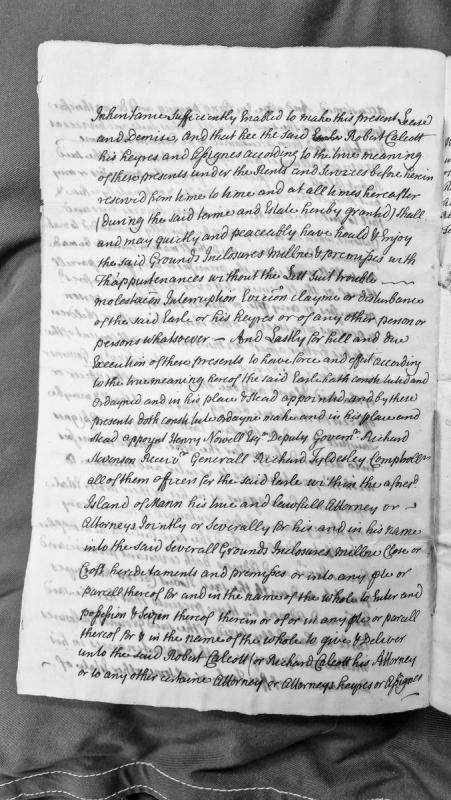
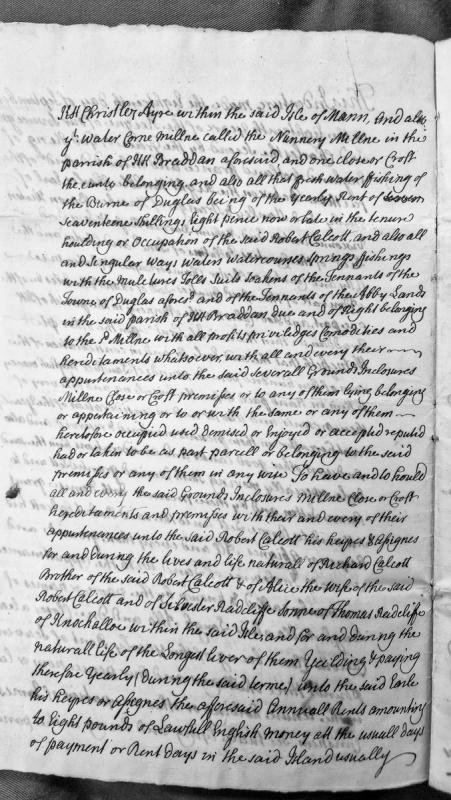
A legal lease document transferring grounds, enclosures, a mill and premises to Robert Calcott, with warranty against disturbance and appointment of attorneys for possession and seizin. The document appears to be part of a larger conveyance, with the Earl as grantor appointing officers as his legal representatives.
Two related administrative documents from the Atholl Papers concerning the lease of the Governor's house on the Isle of Man. The first (November 1769) is a rent assessment by appointed valuers Thomas Moore and Samuel Wattleworth, setting the annual rent at 24 pounds Manx currency. The second (June 1770) is a letter from the Duke of Atholl granting approval for repairs (£81 4s 6d) and offering a lease during the Governor's tenure. Relevant to governance structures, post-Revestment administrative relations, and the Duke's retained interests in Manx properties.
Two documents relating to the lease and maintenance of Governor John Wood's residence on the Isle of Man. The first (23 Nov 1769) is an arbitrated valuation by Thomas Moore and Samuel Wattleworth of a reasonable yearly rent (£24 manx) for the Governor's lands and recommendation for house repairs. The second (9 June 1770) is a letter from the Duke of Atholl granting consent to repairs (£81 4s 6d) and offering a lease during Wood's governorship with compensation provisions. Provides insight into post-Revestment governance arrangements and the Duke's property interests.
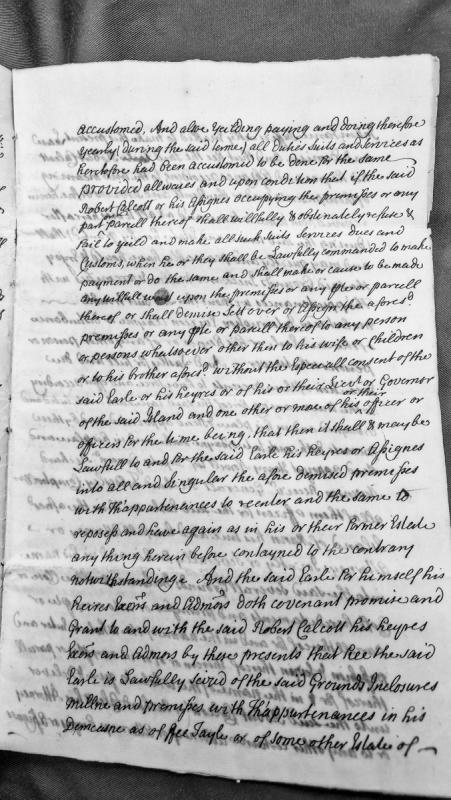
This is an excerpt from a lease or property grant document establishing the terms under which Robert Calcott may occupy and use certain premises including grounds, enclosures, and a mill. The document outlines required duties, suits, services, and customs to be performed, conditions for forfeiture including wilful waste or unauthorized assignment, and the Earl's covenant regarding lawful seizin of the property.
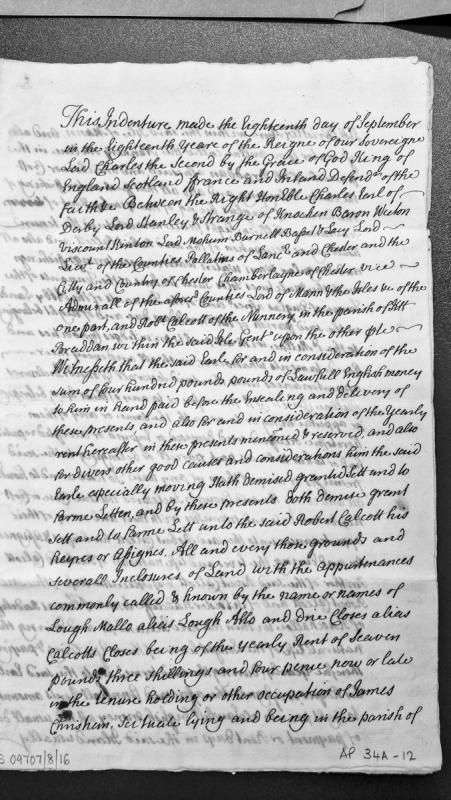
An indenture dated 18 September 1666 between Charles, Earl of Derby (Lord of Mann and the Isles) and Robert Calcott of the Nunnery parish, Kitt Braddan. The Earl leases to Calcott lands known as Lough Mallo and Drie Closes (Calcotts Closes) in exchange for £400 and an annual rent of £7 3s 4d. The document specifies terms of the lease and identifies the previous tenant as James Chrishem.
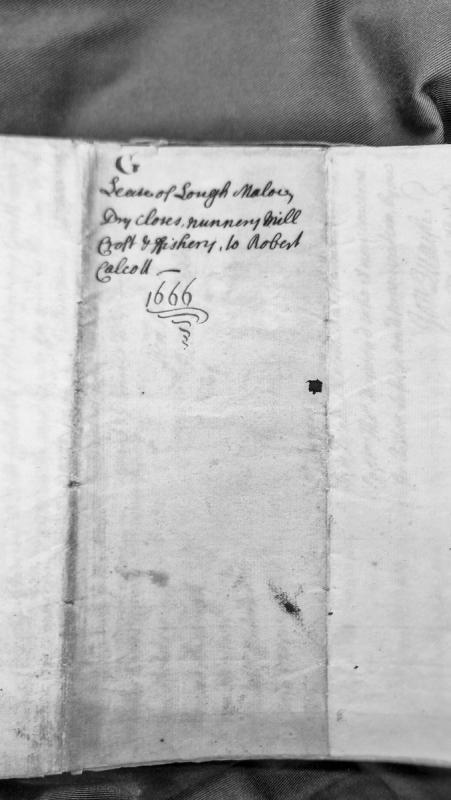
A lease document from 1666 concerning the rental of multiple properties and fishing rights to Robert Calcott. The lease covers Lough Malow (a lake), Dry Closes (enclosed fields), nunnery Mill Croft, and fisheries, representing a substantial property arrangement in 17th-century Isle of Man.
A lease document granting Robert Calcott tenure of the Nunnery Mill in Braddan parish, Isle of Man, along with associated water rights, fishing privileges, and lands in Douglas. The lease is granted for the natural lives of Richard Calcott, Alice Calcott, and Silvester Radcliffe, with annual rent of eight pounds due to the Earl.
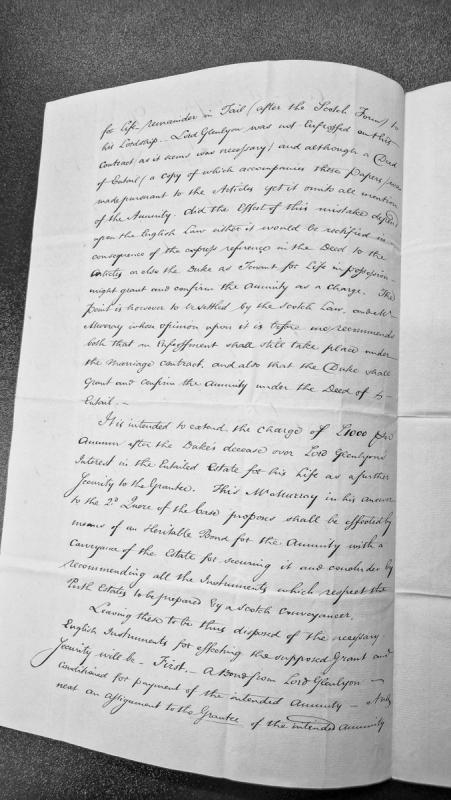
A legal opinion addressing the settlement of an annuity under a marriage contract involving Lord Glenlyon and the Duke. The document discusses issues with a Deed of Entail that omits mention of an annuity, recommends infeftment procedures under Scottish law, and outlines necessary English legal instruments for securing the annuity payment.
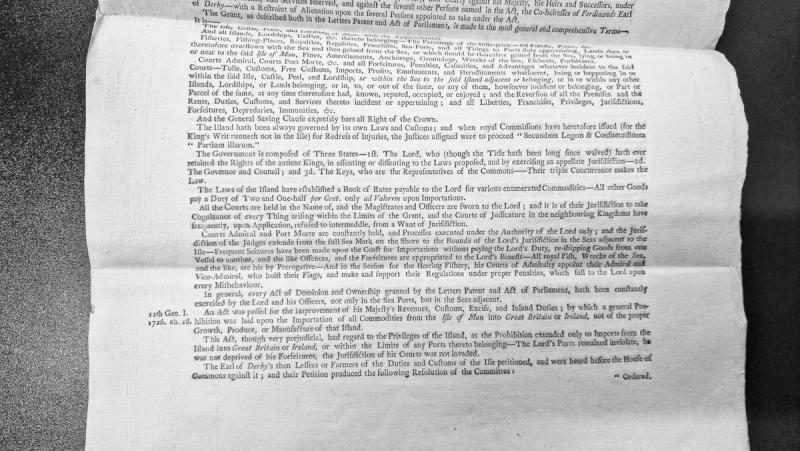
A comprehensive legal opinion examining the Isle of Man's constitutional status, the extent of the Lord's rights and jurisdiction, the tripartite governmental structure (Lord, Governor and Council, House of Keys), and the island's commercial privileges. The document details the Lord's maritime and fiscal authorities, citing specific acts of Parliament including 12 Geo. I (1726) and discussing historical petitions against trade restrictions.
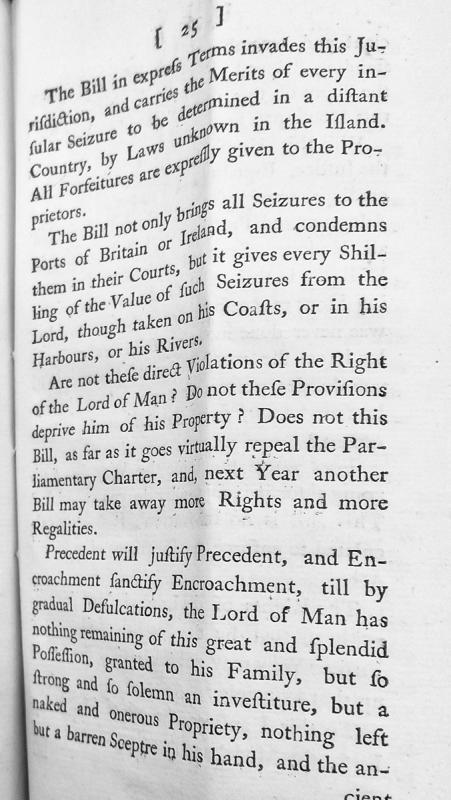
A legal opinion opposing a parliamentary Bill that transfers jurisdiction over insular seizures to British or Irish courts and grants all forfeitures to proprietors rather than the Lord of Man. The document argues this violates the Lord's rights under the Parliamentary Charter and threatens gradual erosion of his authority.
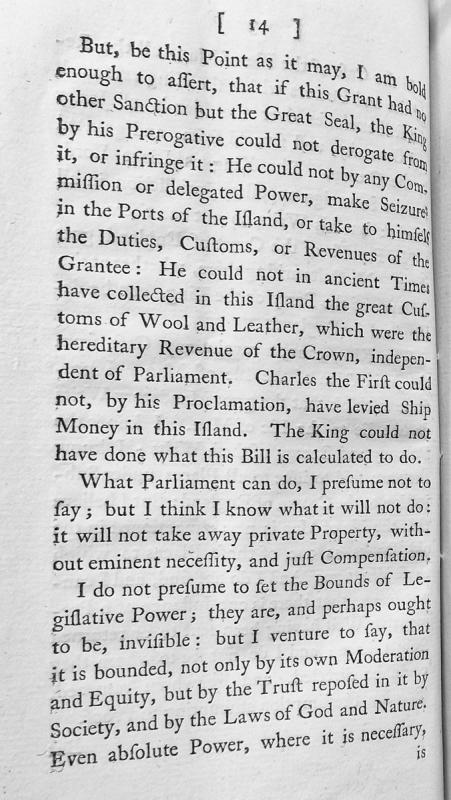
A legal opinion or argumentative text discussing the limits of royal prerogative and parliamentary legislative power. The author argues that the Crown cannot infringe upon grants sealed with the Great Seal, and that Parliament will not take private property without necessity and compensation. The text references historical precedents including Charles I and customs revenues.
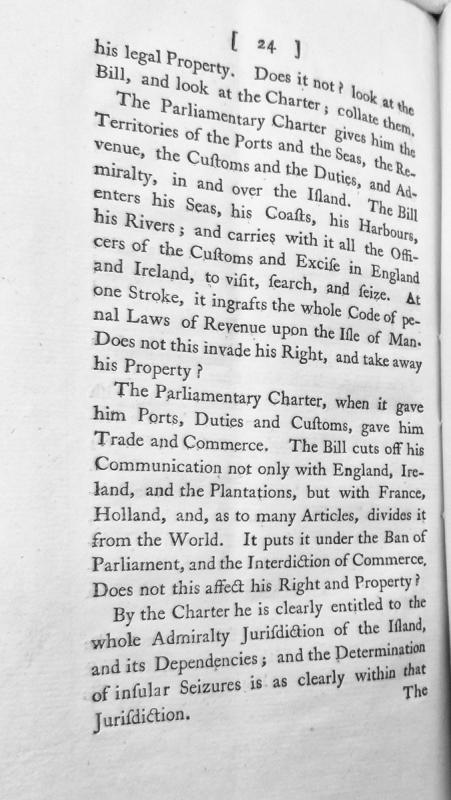
This document presents a legal argument comparing a Parliamentary Charter granting the Isle of Man autonomy over ports, customs, duties, and admiralty with a proposed Bill that would extend English and Irish revenue laws to the island. The author contends that the Bill violates charter rights by imposing customs officers and penal revenue laws, restricting trade with foreign nations, and infringing on admiralty jurisdiction.
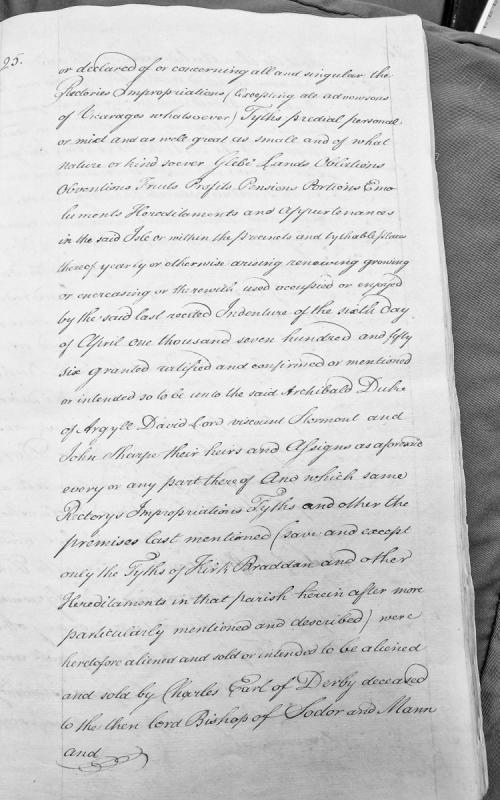
A legal document fragment detailing the transfer and confirmation of rectories, impropriations, tithes, glebe lands and ecclesiastical properties in the Isle of Man. References an indenture of April 6, 1756 granting these properties to Archibald Duke of Argyle, David Lord Viscount Stormont, and John Sharpe. Mentions prior alienation by Charles Earl of Derby to the Bishop of Sodor and Mann.
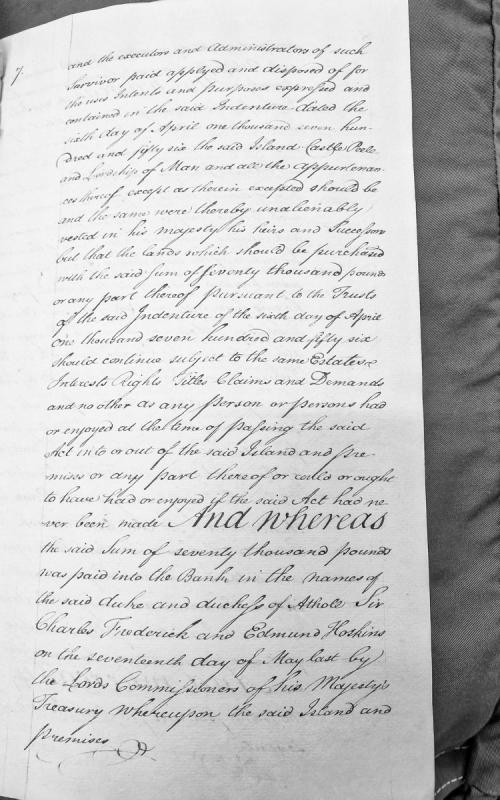
This is an excerpt from a legal document (page 7) discussing the vesting of the Isle of Man, its castles, and appurtenances in His Majesty's heirs and successors, with reference to an Indenture dated 6 April 1756. It records the payment of £70,000 into the Bank on 17 May by the Lords Commissioners of His Majesty's Treasury for the Duke and Duchess of Atholl and others.
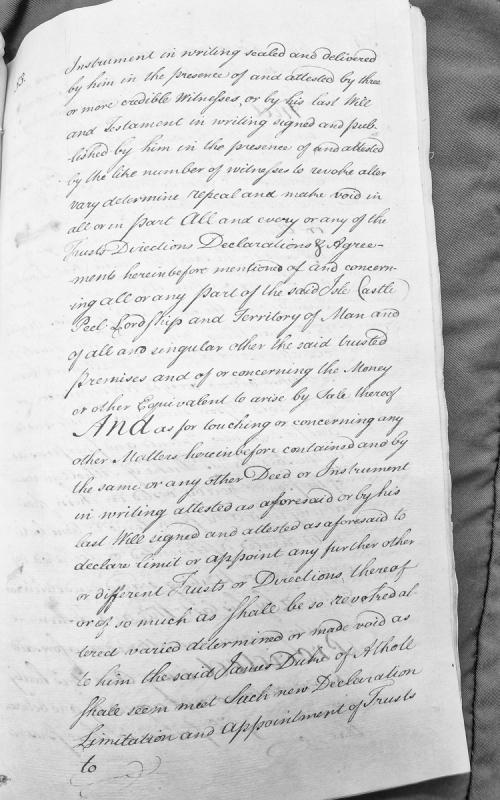
Fragment of a legal document detailing provisions for trusts, directions, and declarations concerning the Isle of Man, Peel Castle, Lordship and Territory. The text outlines conditions for revocation, alteration, and appointment of new trusts by James, Duke of Atholl, through written instruments attested by credible witnesses or by will.
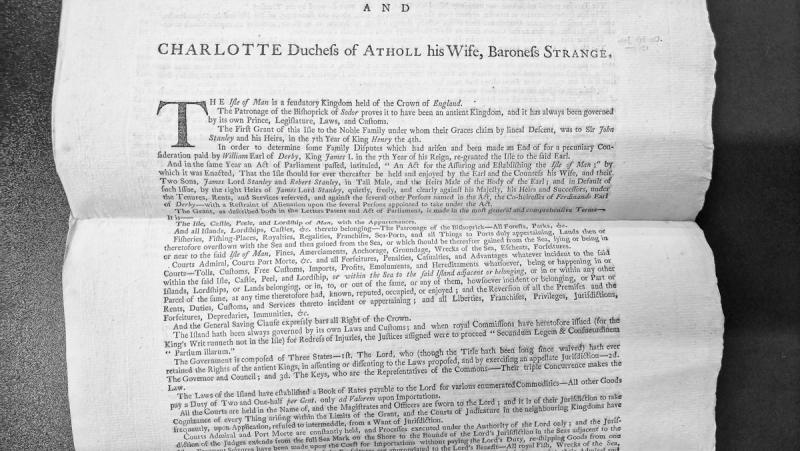
A comprehensive legal document outlining the historical grants, constitutional structure, and rights of the Isle of Man as a feudatory kingdom. It details the 1406 grant to Sir John Stanley and subsequent re-grant by King James I in 1607, describes the tripartite government structure (Lord, Governor and Council, and the Keys), and enumerates the extensive rights conveyed including maritime jurisdiction, customs duties, and judicial authority.
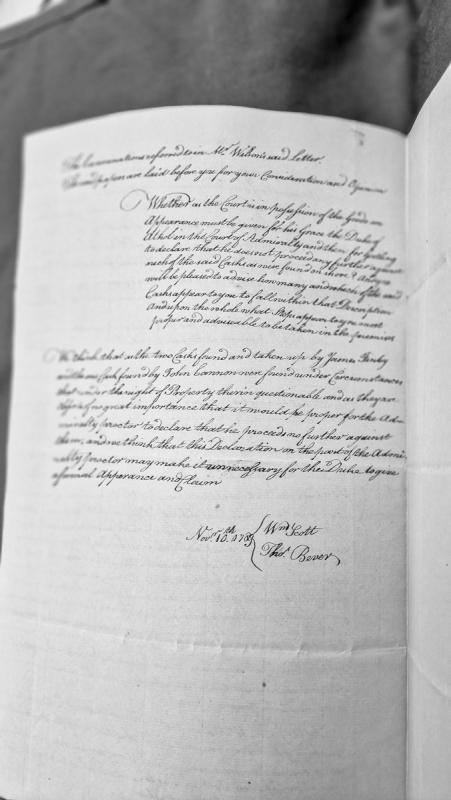
A legal opinion regarding the proper course of action in an admiralty matter involving casks found on shore. The opinion addresses whether the Duke of Athol must make a formal appearance in Court of Admiralty and advises on which casks should be released from proceedings.