Letter from James McCrone (Duke of Atholl's agent) to the Duke reporting severe economic hardship on the Isle of Man in 1827, including failed fishing and crops, mass emigration to America, banking difficulties, and the impact of the Crown acquisition of Atholl's interests. Discusses rent collection problems, mining ventures, and various estate matters.
Letter from James McCrone (administrator) to the Duke of Atholl reporting on salary matters, a debtor (Satterthwaite), a customs seizure of asbestos/polishing powder by Liverpool Custom House, and enclosing a list of newly appointed magistrates (21 Dec 1826). Relevant to post-Revestment governance and Manx trade/customs issues.
A hagiographic account by Jocelinus of Furness (12th century) describing Saint Patrick's legendary missionary work in Man and adjacent islands circa A.D. 444. Includes the narrative of Bishop Germanus and Patrick's ecclesiastical organization. Presented in parallel English and Latin text, this is a published excerpt from Manx Society volume 4 (Monumenta de Insula Manniae), providing early medieval context for Manx Christianity and insular governance structures.
A Latin and English transcription of Jocelinus of Furness's 12th-century account of Saint Patrick's conversion of the Isle of Man and other islands to Christianity around A.D. 444. The text details Patrick's appointment of Bishop Germanus to Man and his establishment of the episcopal seat at what is now called Saint Patrick's Island (Jurby Point). While primarily ecclesiastical and hagiographical in nature, this source provides foundational context for understanding Man's medieval Christian governance and institutional structures that persisted into the 18th century.
Letter from John Bradshawe (State Paper Office) to Colonel Duckenfield acknowledging receipt of correspondence regarding goods and prizes on the Isle of Man following its capture during the English Civil War period. Discusses plans for establishing administration and settlement of the island, commending Duckenfield's service in reducing the island.
Official letter from John Bradshawe at Whitehall to Colonel Duckenfield acknowledging receipt of correspondence regarding prize goods in the Isle of Man following its military reduction. The letter confirms the Council's approval of Duckenfield's service and indicates preparations underway to establish governance and administration of the island.
A brief letter of introduction from John Bradshawe (Lord President of the Council under Cromwell) to Colonel Duckenfield, recommending that an Isle of Man native, John Christian, be received and his informations on matters of state concern be heard. The letter dates to the Commonwealth period and reflects English interest in intelligence from the island.
A brief letter from John Bradshawe (Commonwealth government figure) to Colonel Duckenfield, introducing John Christian, a native of the Isle of Man, who has offered intelligence to the State. The letter requests that Duckenfield receive Christian's informations and act upon them as appropriate. This document provides insight into intelligence-gathering networks and State interest in Manx affairs during the Commonwealth period.
Letter from John Christian, First Deemster of Isle of Man, to an unknown recipient (possibly Hobhouse or Home Office official) dated 30 June 1826. Christian describes his recent acquittal in a libel trial brought by W. Roper, alleges perjury and corruption, and requests intervention from the Home Office (Mr Peel). The letter provides insight into post-Revestment Manx politics, judicial conflicts, and claims of underhand influence in island governance.
Letter from John Christian, First Deemster of the Isle of Man, to an unnamed recipient (possibly Henry Hobhouse at the Home Office) describing a trial for libel brought against him by W. Roper following Roper's readmission to the Manx bar. Christian details allegations of perjury, corruption, and political malice, and appeals for intervention from the Home Secretary (Peel). The letter provides insight into post-1765 Manx judicial politics and tensions between local officials.
A confirmation charter issued by John de Stanley, lord of Mann and the Isles, reaffirming and extending the ecclesiastical privileges and territorial grants originally made by King Magnus to the bishops of Mann and Sodor. The document traces a chain of authority from Magnus through Thomas Randulph (Earl of Moravia) to Stanley, confirming liberties, judicial powers, fisheries, mines, and revenue rights granted to the Church. Relevant to understanding pre-Revestment Manx governance, feudal tenure, and ecclesiastical authority structures.
A nested charter document in which John de Stanley (Lord of Mann and the Isles, 1423) confirms a charter granted by Thomas Randulph (Earl of Moravia, Lord of Mann), who in turn had confirmed an earlier charter of King Magnus of Mann and the Isles to the Bishop of Mann and Sodor. The charter grants ecclesiastical liberties, lands (including the Island of St. Patrick), fisheries, customs rights, mining rights, and exemptions from secular service and exaction. This document provides evidence of medieval constitutional arrangements on the Isle of Man and the powers and property of the Church prior to the Revestment period.
Letter from John Quayle to Harrison (25 Sept 1761) reporting on the new Governor's arrival and planned circuit of Sheading Courts, discussing financial remittances, constitutional inquiry regarding coronation ceremony, and disputes over mill licensing — specifically Captain Moore's paper mill scheme and its impact on Lords' mill rents. Reflects governance and revenue issues on the Isle of Man in the years preceding the 1765 Revestment.
Letter from John Quayle (Manx revenue officer) to Mr Harrison regarding financial accounts with the Duke of Atholl, collection of customs revenue, and serious incidents of cruiser harassment and robbery in Manx ports. Documents tensions between revenue enforcement and smuggling trade, with specific incidents at Douglas and Ramsey involving seizures of brandy, tea, and correspondence.
Letter from John Quayle to Harrison (25 September 1761) discussing the arrival of the new Governor, financial remittances, constitutional matters relating to the Duke of Atholl's prerogatives, and concerns about Captain Moore's proposed paper mill and its impact on the Lords' mill rents. The letter reveals administrative and economic tensions on the Isle of Man in the pre-Revestment period.
Administrative letter from John Wetherall to the Irish Revenue Commissioners reporting on seized goods identified as coming from the Isle of Man. The document describes methodology for identifying smuggled goods (the 'Isle Man package' — tea in small casks, tobacco in trusses, brandy, geneva, and rum in ankers) and lists values of seized items. Directly relevant to understanding smuggling patterns and revenue operations immediately before the Revestment.
Letter from John Wood (likely Governor of Isle of Man) to the Treasury dated 27 June 1770, protesting that Revenue Officers issued orders to Civil and Military officers without gubernatorial authority or knowledge. Wood notes receipt of duplicate letters regarding potential plague vessels and raises constitutional concerns about the Treasury's direct exercise of power over island officials.
Letter from John Wood, Governor of the Isle of Man, to the Board of Customs acknowledging receipt of their letter of 23 May 1765 and confirming his readiness to execute orders. Wood notes he awaits formal directions from the Crown and the Duke of Atholl regarding necessary measures. This correspondence dates to the critical transition period immediately after the Revestment Act (1765) and reveals the administrative uncertainty during implementation.
A historical essay on the Dublin banker Richard McGwire and Liverpool merchant Josiah Poole, who farmed the Isle of Man customs from 1720 and became major operators in the contraband trade. Covers their customs lease, smuggling operations in tobacco, spirits, wine, and East India goods, disputes with Crown officers, and McGwire's death in 1727. Directly relevant to understanding the commercial interests and illicit trade networks that preceded the 1765 Revestment.
A detailed historical narrative of the customs farming activities of Richard McGwire (Dublin banker) and Josiah Poole (Liverpool merchant) on the Isle of Man from 1720 onwards. The article documents their smuggling operations in tobacco, spirits, wine, and East India goods, their recruitment of customs collectors and officers, the exposure of their activities by Joshua Robinson, McGwire's death in 1727, and the broader context of the running trade that eventually prompted the 1765 Revestment. Directly relevant to understanding the economic and operational foundations of Manx smuggling before Parliamentary intervention.
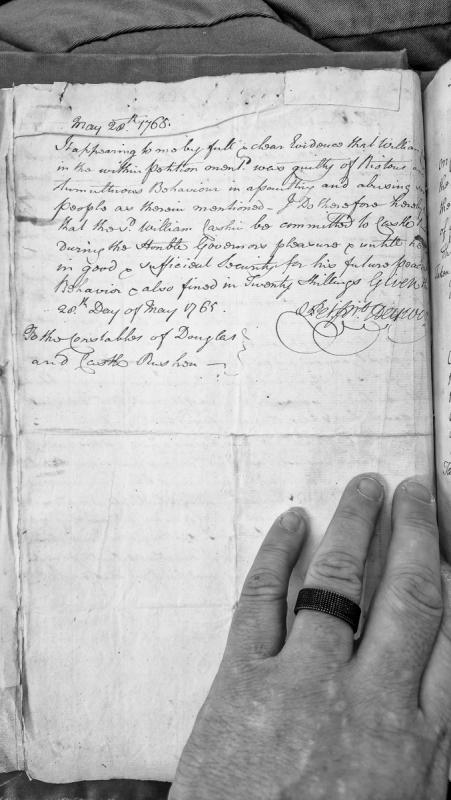
A judicial order dated May 28, 1765, committing William Cashin to Castle Rushen for riotous and tumultuous behaviour involving assault and abuse. The order imposes imprisonment at the Governor's pleasure, requires security for future good behaviour, and levies a fine of twenty shillings.
Charles Lutwidge reports to the Treasury Lords that the Keys of the Isle of Man have enacted statutes at Castletown, including one on licensing spirituous liquors, which may affect royal revenue. Written in September 1774, this is the first legislative exercise by the Keys since the 1765 Revestment. Lutwidge notes the absence of an Attorney General and urges that authentic copies be obtained before royal assent is granted.
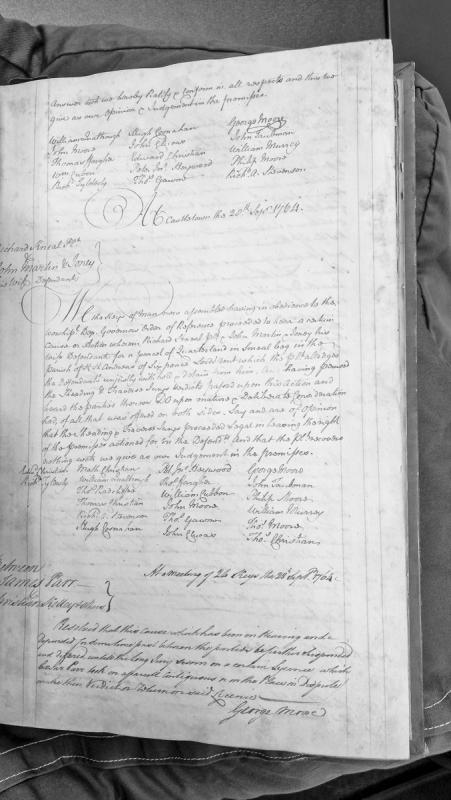
A House of Keys judgment dated 20 September 1764 concerning a dispute over a parcel of quarterland in Kneal beg, Kirk Andreas parish, with six pence lord rent. The Keys upheld the verdict of the Sheading and Traverse Juries in favour of the defendants, denying the plaintiff's claim. The document also includes a subsequent resolution from 28 September 1764 to suspend another case between James Parr and Christian Kelley pending a jury verdict on a disputed licence.
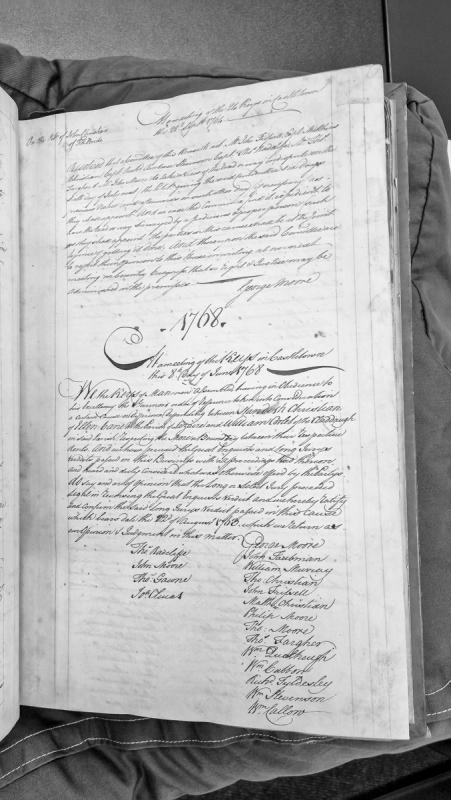
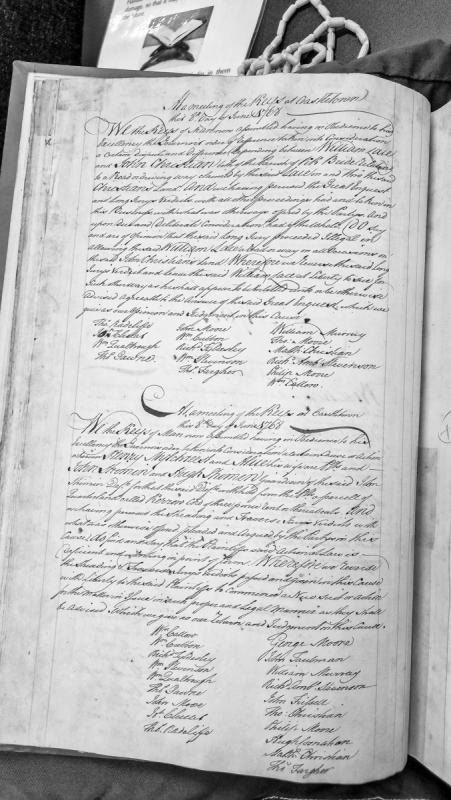
A judgment delivered by the Keys of Man at Castletown ratifying a Long Jury verdict from August 1765 concerning a boundary dispute between Mondus Christian of Ellen Vane and William Corlet of the Claddagh, both in the Parish of Bride. The Keys confirmed the Long Jury's reversal of the Great Inquest's original verdict.
A House of Keys judgment from Castletown reversing lower jury verdicts in a land dispute between Henry Mitchell and his wife (plaintiffs) against John Shimmin and Hugh Shimmin (defendants) concerning a parcel of land called Kerrow. The Keys found the plaintiffs' action deficient in form and granted them liberty to commence a new suit in proper legal manner.