Royal writ from Henry III to the Justices in Ireland confirming the grant of a knight's fee, annual provisions (wine and corn), and homage arrangements to Reginald, King of Man. Originally issued by King John, this 1220 confirmation establishes the feudal relationship between the English Crown and the Manx monarchy during the early 13th century.
A royal letter from King Henry III of England granting protection to the lands, goods, and possessions of Olave, King of Mann and the Islands, during his absence in Norway. The document exists in both English and Latin versions and demonstrates the feudal relationship between the English Crown and the Manx monarchy in the 13th century.
A royal letter from Henry III of England protecting the lands, goods, and possessions of Olave, King of Mann and the Islands, during his absence in Norway. The document is presented in both English translation and original Latin (from Foedera), establishing early English-Manx relations and recognising Olave's status as a king under English protection during the 13th century.
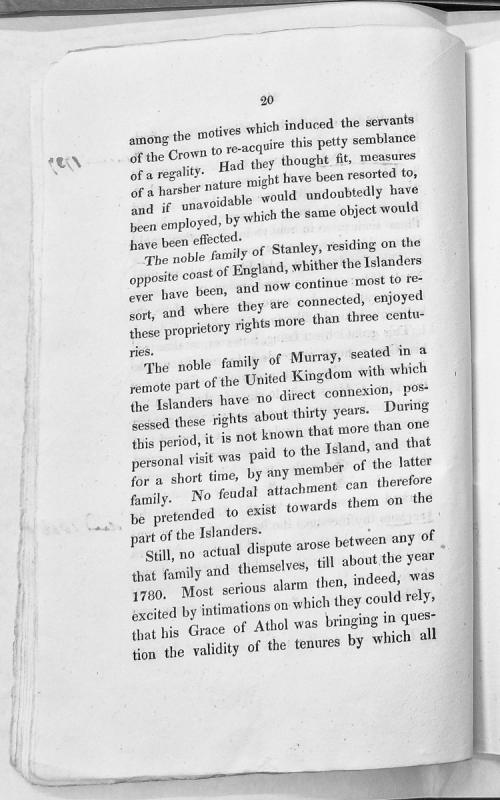
A historical and legal document discussing the motivations for the Crown's re-acquisition of regality rights in the Isle of Man, and comparing the proprietory rights held by the noble families of Stanley and Murray over several centuries. The text notes that the Murray family's thirty-year tenure involved minimal personal engagement with the Island, and references a significant dispute arising around 1780 concerning the validity of land tenures.
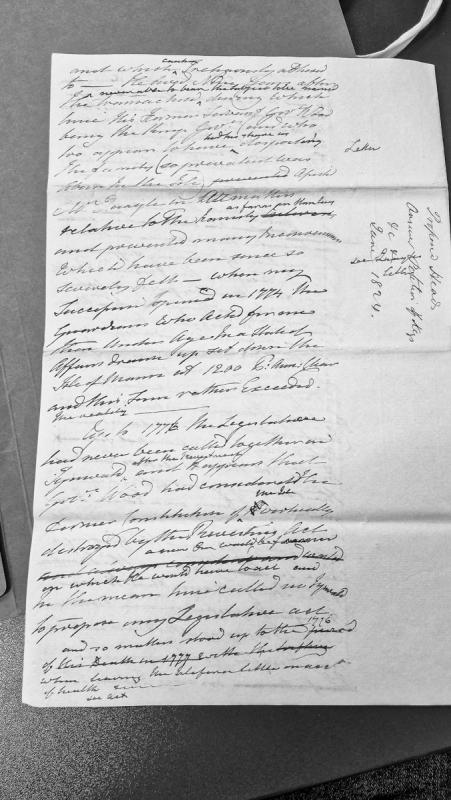
A historical narrative discussing the administration of the Isle of Man following the Revestment Act, focusing on Governor Wood's tenure and the state of the legislature. The document addresses matters of succession, constitutional arrangements, and governance practices during the period leading up to 1777.
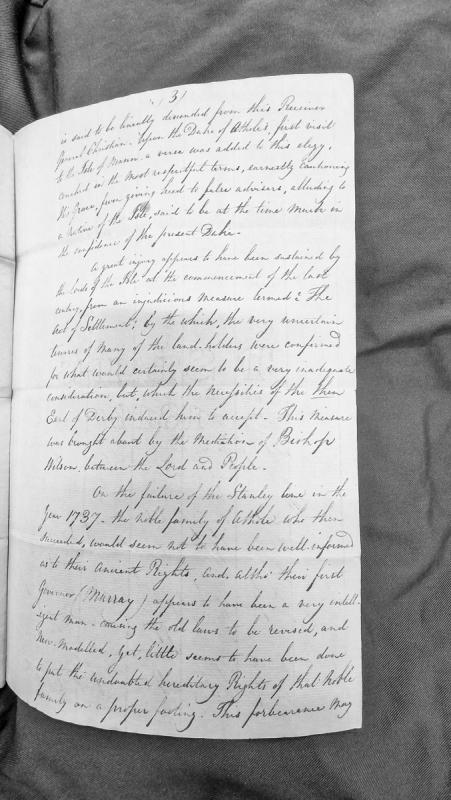
A historical narrative discussing the descent of the Receiver General Christian, the Duke of Athole's visit to the Isle of Man, and the consequences of the Act of Settlement in the early 18th century. The text addresses the transfer of lordship from the Stanley line to the Athole family in 1737 and critiques the new lords' management of their hereditary rights.
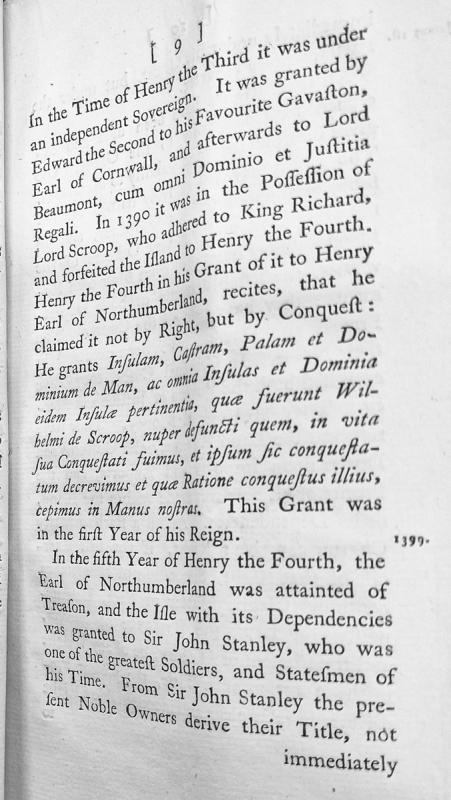
A historical narrative tracing the ownership and sovereignty of the Isle of Man from the reign of Henry III through the early 15th century. The document details grants made by Edward II to Gaveston and Lord Beaumont, the forfeiture under Henry IV following Lord Scroop's adherence to Richard II, and the subsequent grant to the Earl of Northumberland and Sir John Stanley.
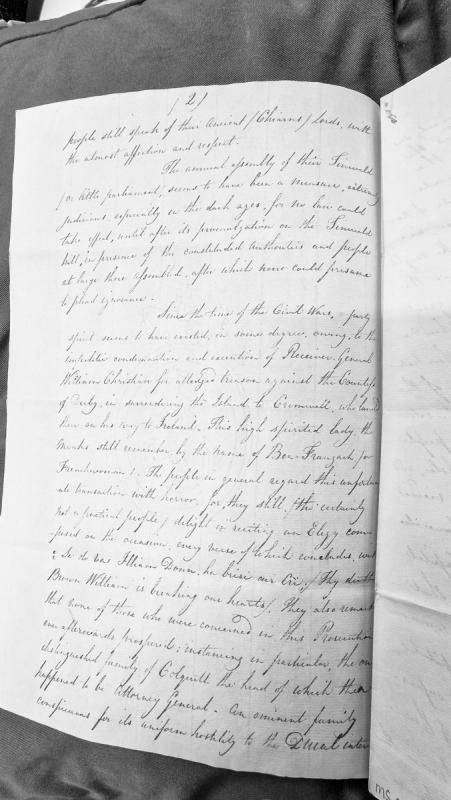
A historical narrative discussing ancient Manx customs, the Tynwald parliament, and the execution of Receiver General William Christian during the English Civil Wars. The passage reflects on party divisions in Manx society stemming from this event and includes references to commemorative Manx poetry and the decline of the Colquitt family.
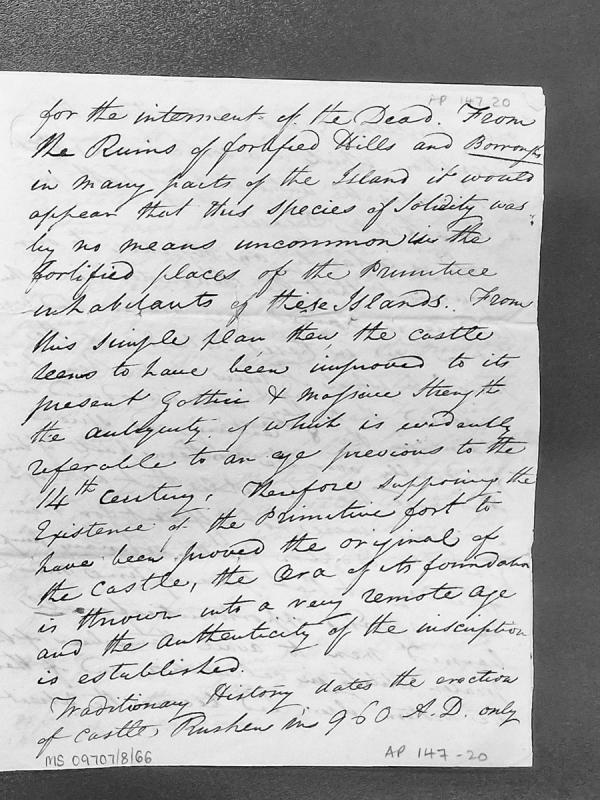
This is an excerpt from a scholarly historical analysis discussing the archaeological and architectural evidence for Castle Rushen's construction and antiquity. It traces the castle's development from primitive fortified structures through to its present Gothic and Massive form, and references traditional dating of the castle's erection to 960 A.D.
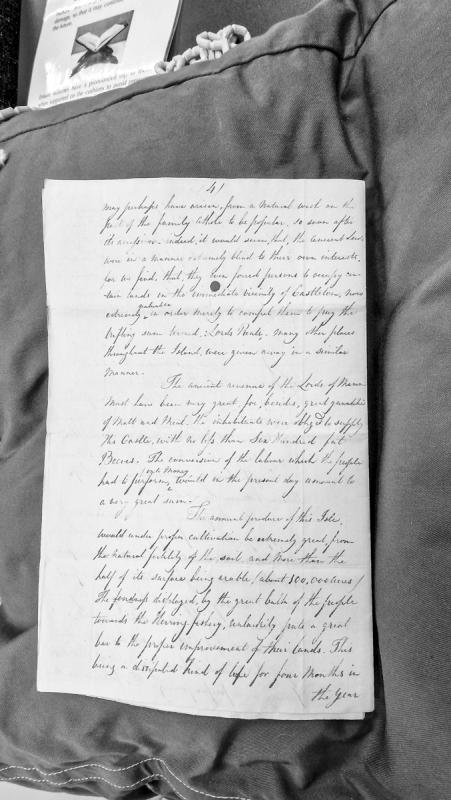
A historical account discussing the ancient revenue systems of the Lords of Mann, including feudal obligations such as the supply of malt, meal, and cattle. The text examines the lords' management of lands near Castletown and comments on the island's agricultural potential and the population's preference for herring fishing over land cultivation.
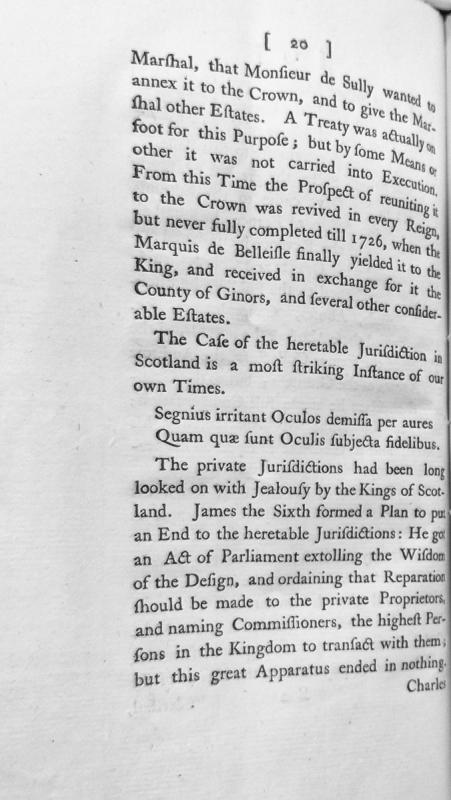
This is an excerpt from a printed pamphlet discussing the history of hereditary jurisdictions, particularly the Maréchalcy in France and private jurisdictions in Scotland. It traces attempts by French kings to annex the Maréchalcy to the Crown, culminating in 1726 when the Marquis de Belleisle yielded it to the King, and discusses similar efforts by Scottish kings including James VI to eliminate hereditary jurisdictions.
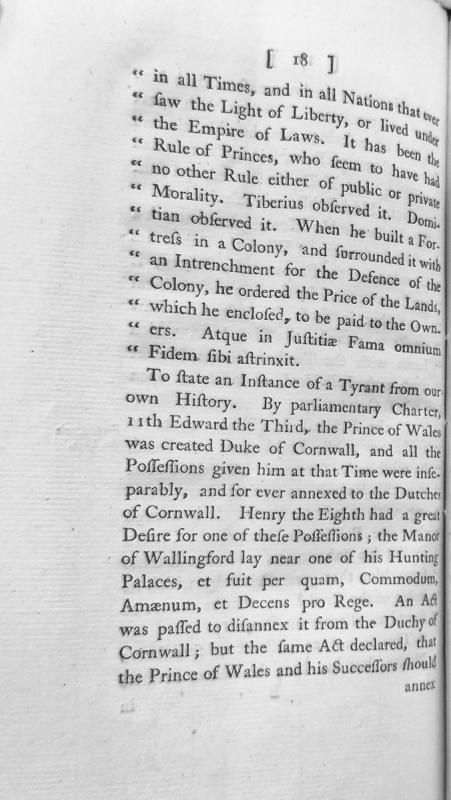
A legal or political treatise examining historical precedents regarding the rights of princes and rules of justice across different eras. The document discusses Roman emperors (Tiberius, Domitian) and English monarchs (Edward III, Henry VIII), arguing principles of property rights and compensation, with particular focus on the Duchy of Cornwall.
A manuscript account by James Stanley, Earl of Derby and Lord of Man, written during his residence on the Isle in 1643, covering the history and antiquities of Man, his administrative proceedings, advice to his son Charles Lord Strange, and observations on Manx customs, governance, and tenure. Originally in Derby's own hand, edited and published in Manx Society volume 3, with introduction from Sir William Dugdale.
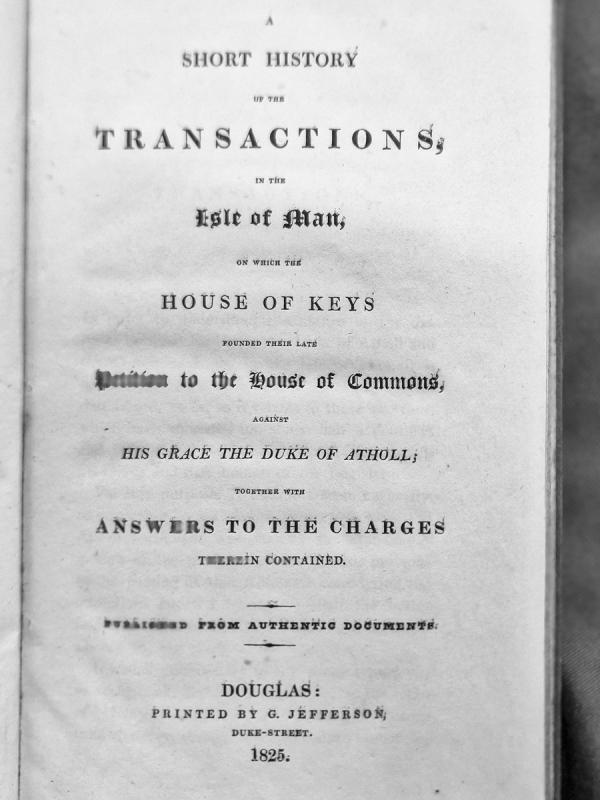
A printed pamphlet published in Douglas in 1825 documenting the transactions and disputes that led to the House of Keys petitioning the House of Commons against the Duke of Atholl, including responses to the charges contained therein. Published from authenticated documents.
An early modern genealogical and historical account tracing the Stanley family from the Norman Conquest through the 18th century, with particular attention to their lands in Staffordshire, Cheshire, and their governance of the Isle of Man. Includes a catalogue of Isle of Man governors from 1417 to 1741, making it directly relevant to understanding the Stanley lordship and administrative structure preceding the 1765 Revestment.
A detailed calendar listing of 1823 Home Office correspondence and administrative papers concerning Isle of Man governance, including disputes over judicial authority, the dismissal of Deemster Gawne, constitutional questions about the House of Keys' role in courts, charitable funds, and legislative measures (tithe commutation, poor rates). Key figures include Duke of Atholl (Governor), James Clarke (Attorney General), and Henry Hobhouse (permanent Under Secretary).
Extract from Holinshead's Chronicle describing events of 1388, including a Scottish military expedition to Ireland led by Robert, earl of Fife, and William Douglas. The passage notably mentions the spoilation of the Isle of Man during their return voyage. This source is relevant to understanding the Isle of Man's position as a target for raid and plunder in the medieval period, and its strategic vulnerability prior to the Revestment.
Extract from Holinshead's Chronicle (16th-century historical compilation) describing 1388 military campaign by Scottish nobles Robert, Earl of Fife and William Douglas into Ireland, with incidental mention of the Isle of Man being spoiled during their return voyage. Included in Manx Society Vol. 4 (Monumenta de Insula Manniae Vol. 1) as a contextual primary source on medieval Manx vulnerability to foreign military action.
A formal record of oaths of fealty taken by Scottish clergy, nobility, and communities to King Edward I of England in 1291, following Edward's assertion of English suzerainty over Scotland. The document includes witness testimony from Perth and other Scottish locations, and notably records Maria, Queen of Man, among those doing homage. This provides crucial genealogical and constitutional context for the Manx connection to English sovereignty prior to the Atholl/Revestment period.
A private letter from Aust (Home Office) to Lieutenant Governor Dawson clarifying that Lord Sydney's official letter to the Duke of Atholl regarding his summer visit does not confer any formal authority or control over the Island, despite the Duke's agent claiming otherwise. Includes the official letters from Lord Sydney and the Secretary of the Treasury authorizing the Duke's inspection visit.
A comprehensive finding aid and index to transcribed Home Office documents held at The UK National Archives (TNA) covering Isle of Man administration 1765–1840, including SP 48 State Papers and HO 98–99 series. Lists archive references, document summaries, and dates for c.2,000 papers relating to Governors Wood and Smith, Lt-Governor Dawson, Charles Lutwidge (Receiver General), and later Duke of Atholl's administration. Provides essential locational and contextual information for primary sources on Treasury control, revenue, civil establishment, and Island governance during and after the 1765 Revestment.
A research guide and index to Home Office correspondence documenting Crown governance of the Isle of Man after the 1765 Revestment purchase. Covers the period 1765-1840 with focus on governors' reports, administrative challenges, constitutional development, and the Duke of Atholl's ongoing disputes. Organizes key periods by governor tenure and identifies core themes for book project integration.
A meta-guide to the Home Office document collection covering Crown governance of the Isle of Man post-Revestment, spanning 1765–1840. Organises documents by gubernatorial period, identifies key themes (constitutional confusion, administrative challenges, Duke of Atholl disputes), and cross-references related Treasury and Atholl archive sources. Designed to help researchers navigate implementation and aftermath phases.
Official Journal of the House of Commons for 10 January 1765, recording the opening of Parliament under George III, the King's Speech on foreign and domestic affairs, and extensive Committee of the Whole resolutions on stamp duties for the American colonies and plantations. The document includes discussions of Irish provisions trade, road improvement petitions, and the detailed Stamp Act duty schedules that would precipitate the colonial crisis.
Official proceedings of the House of Commons for 10 January 1765, including the King's Speech from the Throne, parliamentary address, administrative business, and crucially, the Committee of the Whole House resolutions on stamp duties for the American colonies. This document captures the parliamentary framework and fiscal justifications for the Stamp Act of 1765, contemporary with planning for Isle of Man revestment.